Soot and residue
Cleaning methods should match the surface and type of residue. Abrasive wiping can embed soils or damage finishes.
After a fire, damage can involve smoke residues, odors, contaminated belongings and suppression water as well as the areas directly burned.
Fire damage can extend well beyond burned surfaces. Smoke residues, soot particles, odors, and water used to suppress a fire may affect rooms that never experienced direct flames. What can be cleaned or restored depends on the source of the fire, materials involved, and where residues traveled.
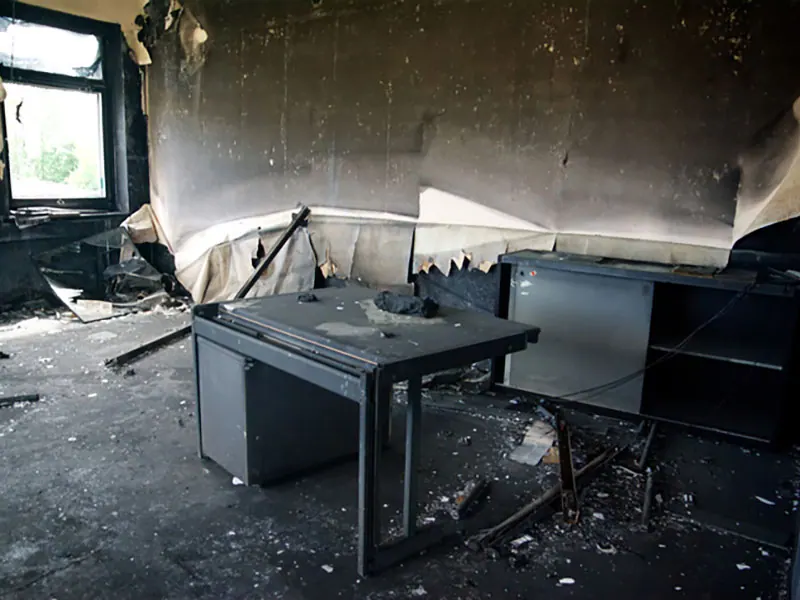
Do not reenter a fire-damaged property until emergency authorities permit access. Structural stability, electrical systems, remaining heat, airborne contaminants, and compromised contents may all present hazards. Once access is authorized, document conditions without disturbing residues unnecessarily.
Smoke moves with air currents and pressure differences, and particles can settle on surfaces far from the ignition area. Residues vary with the fuels burned and fire conditions. This is why apparently untouched cabinets, textiles, or HVAC components may still need evaluation.
Cleaning methods should match the surface and type of residue. Abrasive wiping can embed soils or damage finishes.
Odor treatment should follow source identification and appropriate cleaning. Fragrance alone does not remove contaminated residue.
Some belongings may be restorable; others may have damage or contamination that makes restoration impractical.
Water used in firefighting may require extraction and drying alongside fire and smoke remediation.
Not before understanding the residue and surface. Certain soot types smear or permanently stain when handled with an unsuitable cleaner, and damaged finishes may be fragile. A restoration professional can evaluate whether dry cleaning, specialty cleaning, or material replacement is appropriate.
A professional assessment considers affected rooms, residue pathways, building systems, surface materials, contents, and any water damage caused by suppression. The goal is a property-specific plan, not a generic promise that everything can be cleaned.
Fire suppression may soak floors, walls, ceilings and belongings. Even when visible fire damage is limited, retained moisture can create a separate restoration problem. Our water damage restoration resource explains why extraction alone does not establish that structural materials are dry.
Smoke residues can settle on porous materials and enter cavities and HVAC pathways. Odor control may require identifying and addressing the affected materials rather than simply adding fragrance.
Yes. Water used to suppress a fire may wet building assemblies and contents. Restoration planning should account for both smoke residue and water-related moisture concerns.