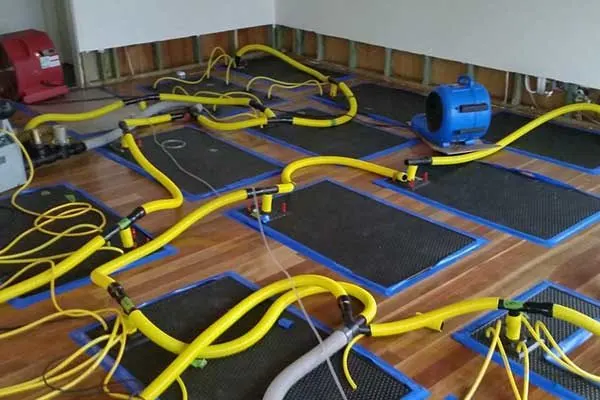
The drying process at a glance
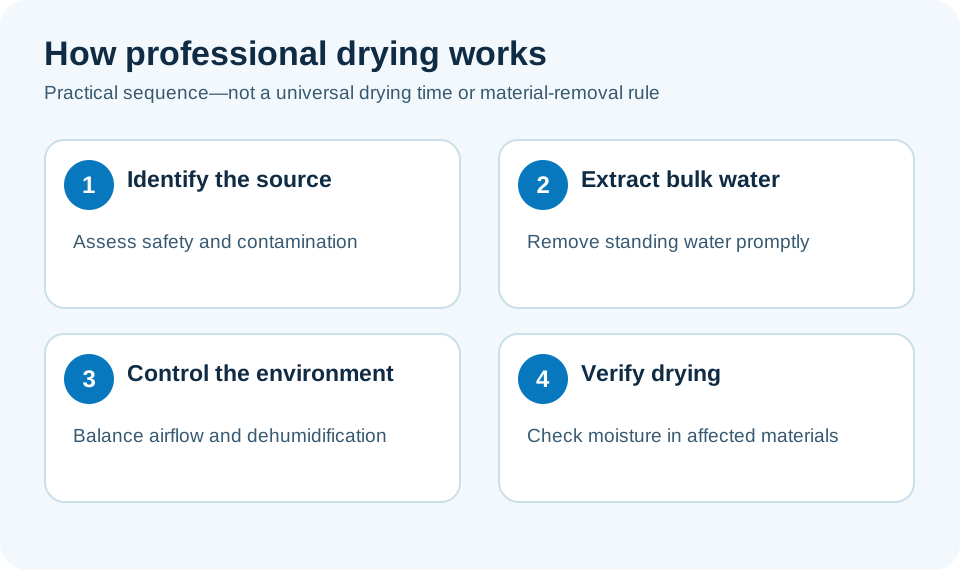
This visual is an educational overview, not a substitute for evaluating contamination, material condition, and drying goals at a specific property.
Why does extraction come before fans?
Standing water can continue migrating into wall bases, carpet cushion, and flooring layers. Removing that water reduces the amount that must evaporate from building materials. Conditions may require professional extraction and containment, especially when the water source is uncertain.
Why do dehumidifiers matter?
Air movement transfers moisture from wet surfaces into the surrounding air. Dehumidification removes water vapor so evaporation can continue under controlled conditions. Outdoor humidity, temperature, and the materials involved affect how quickly this happens.
How do you know when the building is dry?
Drying completion is not established by touch or appearance. Restoration professionals compare moisture readings from affected materials with appropriate drying goals, check hidden assemblies as needed, and document progress. Drying decisions vary by material and water conditions.
What if the water came from a drain or sewer?
Sewage and other potentially contaminated water require different precautions than a clean supply-line leak. Keep people and pets away and avoid attempting to dry contaminated porous materials with household fans before the hazard is assessed.
What standard informs professional water restoration?
ANSI/IICRC S500 is an industry reference for professional water damage restoration. Its principles inform assessment, drying and monitoring decisions; the standard does not mean every wet material can be saved or every loss dries in a fixed number of days.
Need water damage help in Greenville?
DryDoctors Water Restoration of Greenville connects homeowners and businesses throughout Upstate South Carolina with restoration services performed by IICRC-certified professionals. Call (864) 263-1325 for service inquiries.