When might drywall be dried in place?
After a relatively recent clean-water leak, undamaged gypsum board may be a candidate for drying if affected assemblies can be assessed and moisture can be reduced appropriately. This is not a guarantee. Wall cavities, insulation and finishes can change the decision.
When is removal more likely?
Removal becomes more likely when materials are contaminated, structurally degraded, delaminated, visibly damaged, or cannot be appropriately accessed and dried. Highly contaminated losses may require more aggressive material removal and cleaning than clean-water incidents.
What does a moisture meter actually tell you?
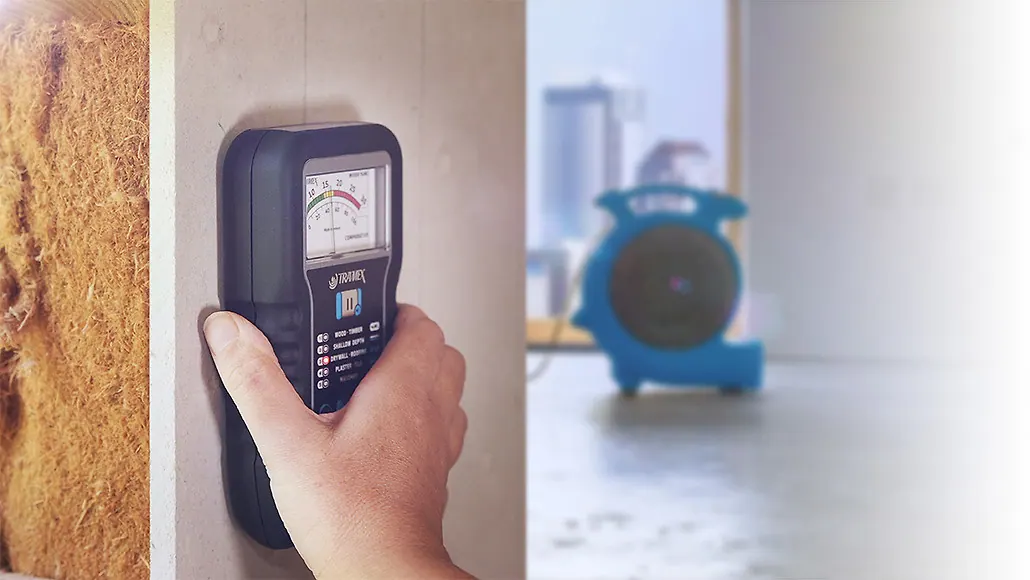
It helps locate and monitor elevated moisture. It does not, by itself, determine contamination, prove an entire concealed cavity is dry, or establish that all materials should be kept. Readings need context, appropriate instruments and a documented assessment.
Can you just run fans against the wall?
Air movement may be part of drying, but it does not replace source control, moisture mapping, or evaluation of concealed materials. In contaminated conditions, indiscriminate airflow can create additional concerns.
Practical takeaway
Ask the restoration professional which layers are wet, how the source of the water affects the plan, what measurements will be used, and how completion will be verified. See the water damage restoration guide for the larger process.