Will Mold Always Grow on Wet Drywall in Greenville, SC?
Will Mold Always Grow on Wet Drywall in Greenville, SC?
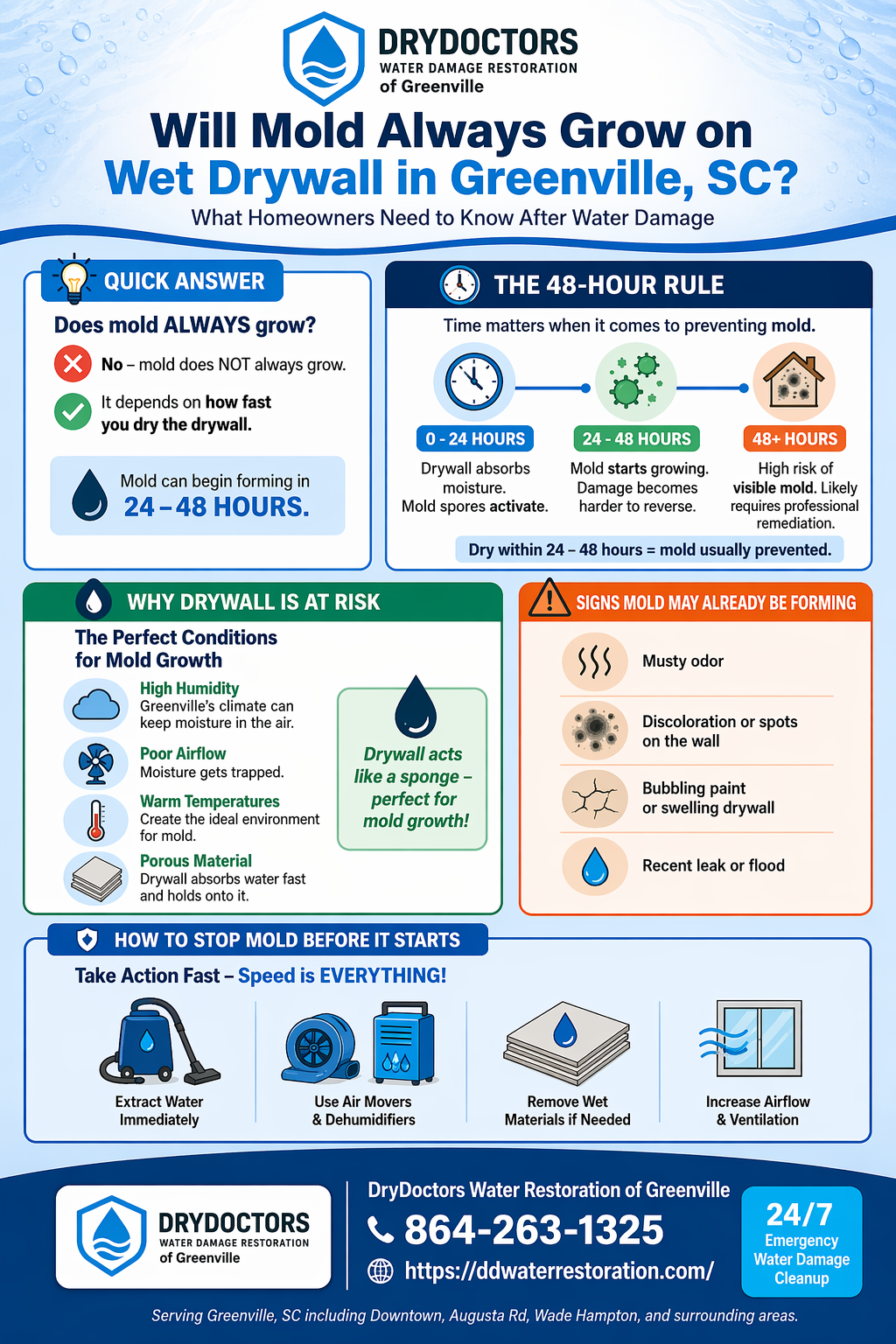
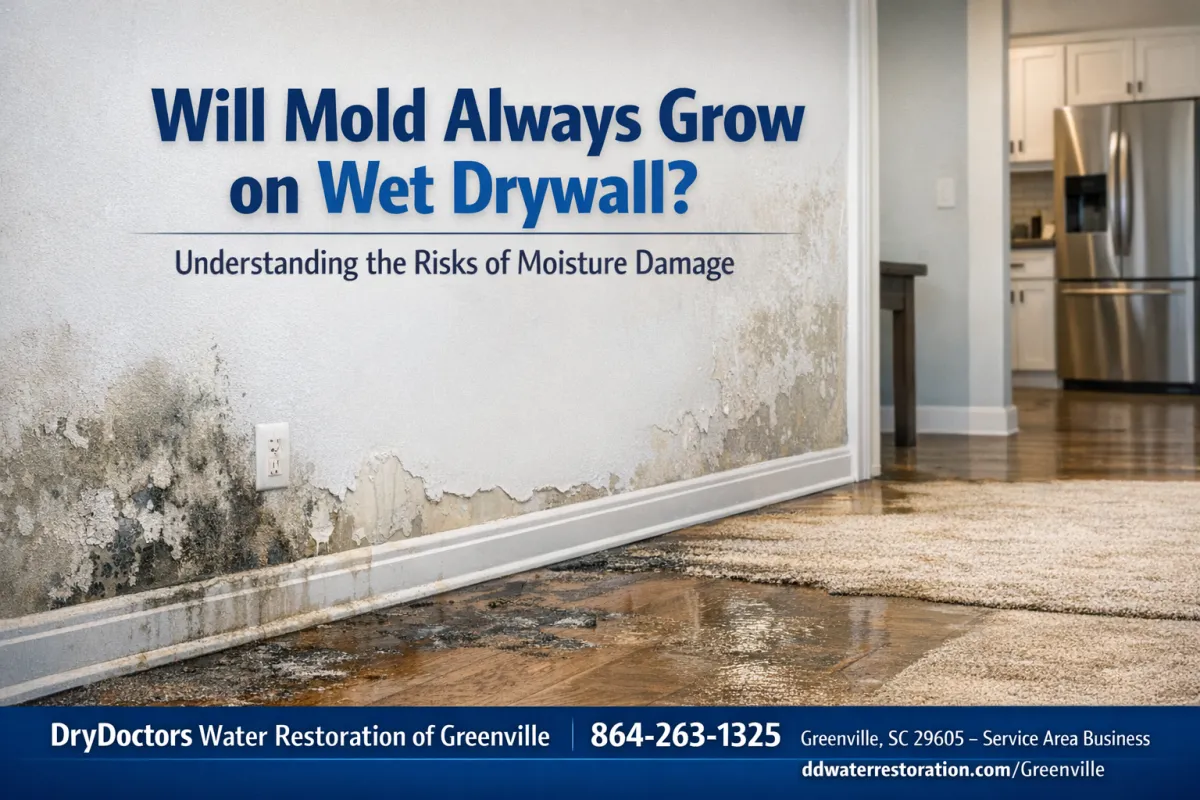
Mold does not always grow on wet drywall—but it becomes highly likely if moisture remains long enough for microbial conditions to develop. The key factor is not just that drywall got wet, but how long it stayed wet, how deeply moisture penetrated, and whether it was properly dried.
In Greenville, SC, high humidity and common building materials make drywall especially vulnerable to hidden moisture retention, which increases the risk of mold growth after water damage.
Drywall Is Highly Absorbent and Retains Moisture Internally
Drywall (gypsum board) is one of the most moisture-sensitive materials in a home.
It consists of:
a gypsum core
porous paper facing
capillary pathways that absorb water quickly
When drywall gets wet:
moisture moves inward, not just across the surface
water becomes trapped inside the material
drying requires controlled airflow and dehumidification
According to gypsum industry research:
Drywall can retain moisture internally even when it appears dry on the surface.
Mold Requires Specific Conditions—Not Just Water
Mold growth depends on three primary factors:
Moisture
Organic material (drywall paper facing)
Time
The Institute of Inspection Cleaning and Restoration Certification S500 and S520 standards explain that microbial growth becomes a concern when materials remain wet long enough to support amplification.
This means:
wet drywall does NOT automatically equal mold
but delayed drying significantly increases the probability
Time Is the Critical Variable
The longer drywall remains wet, the greater the risk of mold growth.
This is because:
moisture activates microbial conditions
organic materials provide a food source
stagnant air slows evaporation
The IICRC emphasizes that:
“Mitigation should begin as soon as safely possible…”
Because once moisture remains:
microbial growth becomes more likely
contamination conditions can change
materials may no longer be salvageable
Greenville Conditions Increase Mold Risk
In Greenville and Upstate South Carolina, mold risk is higher due to:
high humidity slowing evaporation
crawl spaces increasing ambient moisture
mixed building assemblies trapping moisture
seasonal storms causing repeated water exposure
These conditions mean drywall may:
stay damp longer
dry unevenly
retain hidden moisture behind walls
Drywall Often Looks Dry Before It Actually Is
One of the biggest misconceptions is:
“If it feels dry, it is dry.”
That is not true.
Drywall dries from the outside in. This means:
the surface may feel dry
internal moisture may still be present
trapped moisture can continue to support mold growth
This is why professional drying includes:
moisture measurement
humidity control
verification of drying goals
Learn more:
Professional Structural Drying & Dehumidification
When Wet Drywall Can Be Saved vs Removed
Wet drywall does not always need to be removed—but it depends on:
how long it was wet
the type of water involved
how deeply moisture penetrated
whether proper drying is possible
The IICRC notes that:
Some materials may require removal when contamination or prolonged moisture exposure occurs.
In many cases:
clean water + fast drying = salvageable
delayed drying or contamination = removal recommended
Mold May Start Behind the Surface First
Even if mold is not visible, it may already be developing:
behind drywall
inside insulation
within wall cavities
The Centers for Disease Control and Prevention confirms mold can grow in hidden areas where moisture is present.
This is why smell is often the first sign—not visual growth.
https://www.podbean.com/eas/pb-cwp5k-1a96f62
The Real Risk Is Unresolved Moisture
The question is not:
“Will mold grow?”
The real question is:
“Was the drywall dried correctly and completely?”
If moisture remains:
mold becomes increasingly likely
structural materials can degrade
indoor air quality can be affected
What to Do If Drywall Gets Wet
If drywall becomes wet:
Identify the source of water
Remove standing water immediately
Begin drying within hours
Monitor moisture levels
Evaluate for hidden moisture
Start here:
Emergency Water Removal & Cleanup
Bottom Line
Mold does not always grow on wet drywall—but it becomes highly likely when moisture is not removed quickly and completely.
Drywall is one of the most vulnerable materials in a home because it absorbs and retains moisture internally.
The outcome depends on:
how fast drying begins
how thoroughly moisture is removed
whether hidden moisture is addressed
Need help with wet drywall or suspected mold in Greenville, SC?
DryDoctors Water Restoration of Greenville provides moisture detection, structural drying, and water damage restoration services.
📞 864-263-1325
📍 https://maps.app.goo.gl/ZTPxnC2QwHb24t6K6
🌐 https://ddwaterrestoration.com/