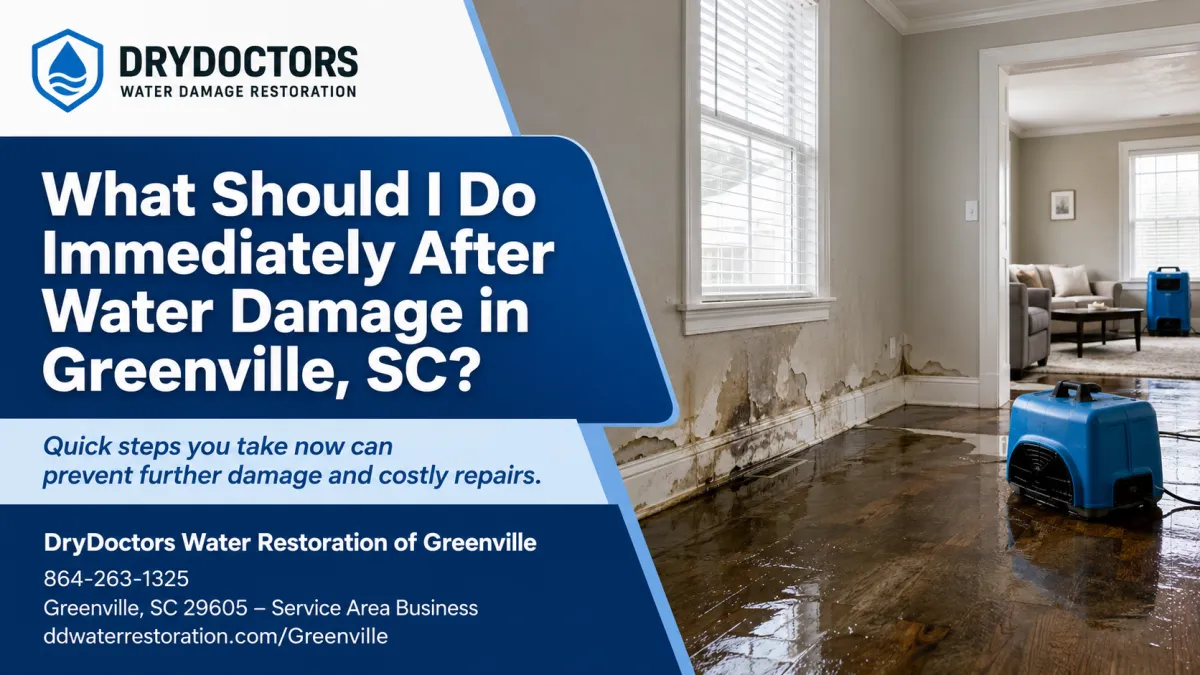
What Should I Do Immediately After Water Damage in Greenville, SC?
Immediately after water damage, the most important steps are to stop the water source, protect safety hazards, remove standing water if possible, and begin drying before moisture spreads deeper into the structure. In Greenville, SC, fast action is especially important because humidity slows drying and increases the risk of hidden moisture and mold growth.
Water damage gets worse over time—not just because of the water itself, but because moisture continues moving through materials long after the initial event.
Step 1: Stop the Source of Water
Before anything else, stop the water intrusion if it is safe to do so.
This may involve:
shutting off the main water supply
stopping an overflowing appliance
addressing a roof leak temporarily
isolating a burst pipe
The longer water continues flowing, the more materials become saturated.
Step 2: Prioritize Safety Before Entering Affected Areas
Water damage can create hidden hazards.
Before entering:
avoid standing water near electrical outlets
be cautious around sagging ceilings
watch for slippery flooring
avoid contaminated water exposure
The Centers for Disease Control and Prevention warns that floodwater and contaminated water can contain harmful contaminants and microorganisms.
If the area is unsafe, wait for professional evaluation.
Step 3: Remove Standing Water as Quickly as Possible
The faster standing water is removed, the lower the risk of permanent damage.
This may include:
wet vac extraction
pumping out pooled water
removing soaked rugs or contents
However, removing visible water is only the beginning.
Water immediately starts spreading into:
drywall
subfloors
insulation
framing
cabinetry
Start here:
Emergency Water Removal & Cleanup
Step 4: Understand That Moisture Continues Spreading
One of the biggest misconceptions is that damage stops once visible water is gone.
In reality:
drywall absorbs moisture internally
wood wicks water through capillary action
flooring traps moisture underneath surfaces
The Institute of Inspection Cleaning and Restoration Certification S500 Standard explains that water migrates quickly through porous materials and assemblies.
This is why fast drying is critical.
Step 5: Begin Drying Immediately
After extraction, drying should begin as soon as possible.
This involves:
airflow to increase evaporation
dehumidification to remove moisture from the air
controlling humidity and temperature
In Greenville, humidity slows evaporation naturally, which means materials can stay wet longer if drying is delayed.
Learn more:
Professional Structural Drying & Dehumidification
Step 6: Move and Protect Belongings
Water damage spreads quickly through contents.
Important steps include:
moving furniture off wet flooring
separating wet fabrics
removing electronics from affected areas
protecting valuables from additional exposure
This helps reduce secondary damage while drying is underway.
Step 7: Avoid Common Mistakes
Many homeowners unintentionally make water damage worse.
Common mistakes include:
waiting too long to begin drying
relying only on household fans
assuming surfaces are dry when moisture remains inside
ignoring hidden moisture behind walls or floors
Water damage becomes more severe the longer moisture remains trapped.
Step 8: Watch for Signs of Hidden Moisture
Even after cleanup, hidden moisture may still be present.
Common warning signs include:
musty odors
warped flooring
staining
elevated humidity
soft drywall or trim
The CDC emphasizes that moisture problems can contribute to microbial growth if not addressed properly.
https://www.podbean.com/eas/pb-99qux-1abbbaf
Greenville-Specific Conditions Make Fast Action More Important
In Greenville and Upstate South Carolina:
humidity slows drying
crawl spaces retain moisture
storms create repeated exposure risks
older homes often contain moisture-sensitive materials
Because of this, moisture can remain trapped longer than many homeowners realize.
Why Immediate Action Matters
Water damage becomes more expensive and destructive over time because:
materials absorb moisture deeper
structural damage increases
microbial growth risk rises
materials become less restorable
The goal is not just removing water—it is stopping moisture from continuing deeper into the structure.
Bottom Line
Immediately after water damage, focus on:
stopping the water source
protecting safety hazards
removing standing water
beginning drying quickly
preventing moisture from spreading further
Fast action helps reduce structural damage, hidden moisture, and long-term restoration costs.
Need emergency help after water damage in Greenville, SC?
DryDoctors Water Restoration of Greenville provides 24/7 emergency response, extraction, structural drying, and moisture inspection services.
📞 864-263-1325
📍 https://maps.app.goo.gl/ZTPxnC2QwHb24t6K6
🌐 https://ddwaterrestoration.com/