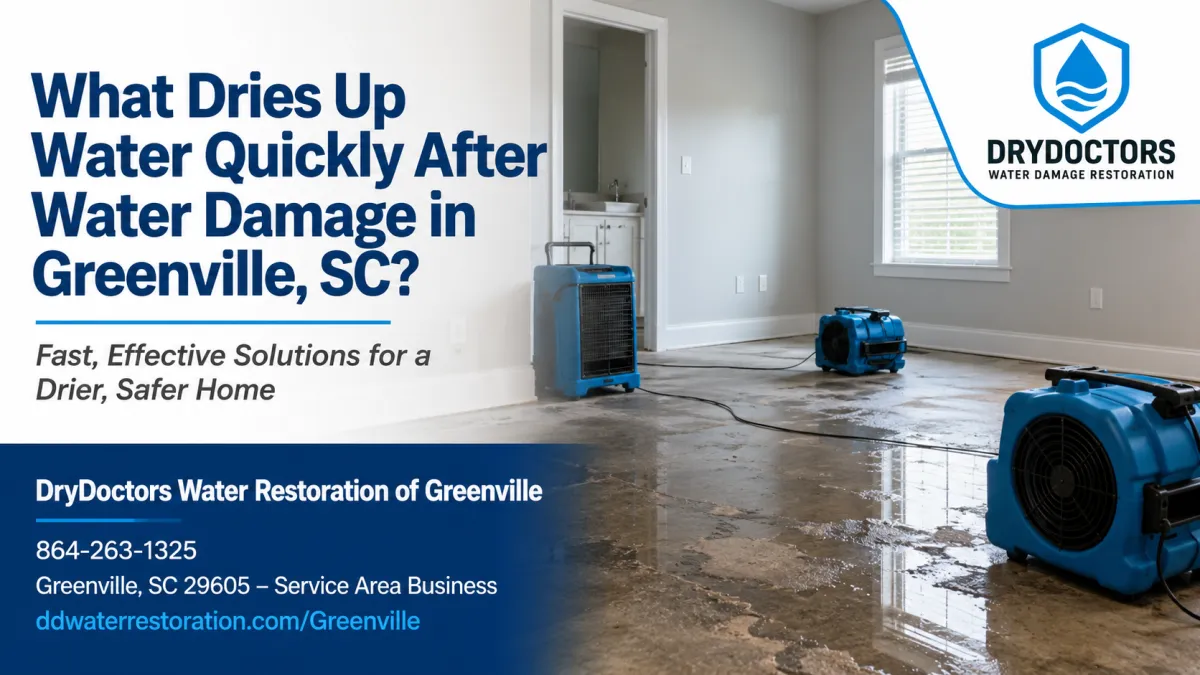
What Dries Up Water Quickly After Water Damage in Greenville, SC?
The fastest way to dry up water after water damage is not simply using fans or opening windows. Effective drying happens when water is removed from the structure through a controlled combination of extraction, evaporation, airflow, dehumidification, and moisture management. In Greenville, SC, where humidity levels remain elevated through much of the year, drying water quickly becomes even more dependent on controlling the indoor environment rather than relying on natural evaporation alone.
One of the biggest misconceptions homeowners have after water damage is assuming that visible water is the entire problem. In reality, by the time standing water is noticed, moisture has often already migrated into:
drywall
subfloors
insulation
framing
cabinetry
flooring systems
What determines whether materials can be restored is often not the amount of visible water—but how quickly moisture can be removed before structural deterioration and microbial growth begin developing.
Water Does Not Stay Where It Lands
Water behaves aggressively inside a structure.
Once materials become wet, moisture immediately begins moving through:
capillary action
absorption
gravity
vapor diffusion
This is why a small appliance leak in a Greenville kitchen may eventually affect:
adjacent drywall
subfloor systems
baseboards
cabinetry
crawl space framing beneath the floor
The IICRC S500 Standard for Professional Water Damage Restoration explains in the S500 that water migration begins immediately and that drying success depends on controlling both visible and hidden moisture conditions.
Why Airflow Alone Does Not Dry Water Properly
Many homeowners place household fans in affected areas assuming moving air alone will solve the problem.
Airflow is important—but airflow by itself does not remove moisture from the structure.
Air movement simply accelerates evaporation by pushing moisture away from wet surfaces. However, once that moisture enters the air, it must still be removed from the indoor environment.
Without dehumidification:
humidity rises
evaporation slows
materials reabsorb moisture
drying stalls
This is especially problematic in Greenville and Upstate South Carolina because the outdoor air is already humid much of the year. Opening windows during humid conditions may actually slow structural drying rather than improve it.
The National Institute of Building Sciences has repeatedly emphasized the importance of managing indoor moisture conditions to prevent long-term building deterioration and indoor environmental issues.
Extraction Is What Removes Water Quickly in the Earliest Stage
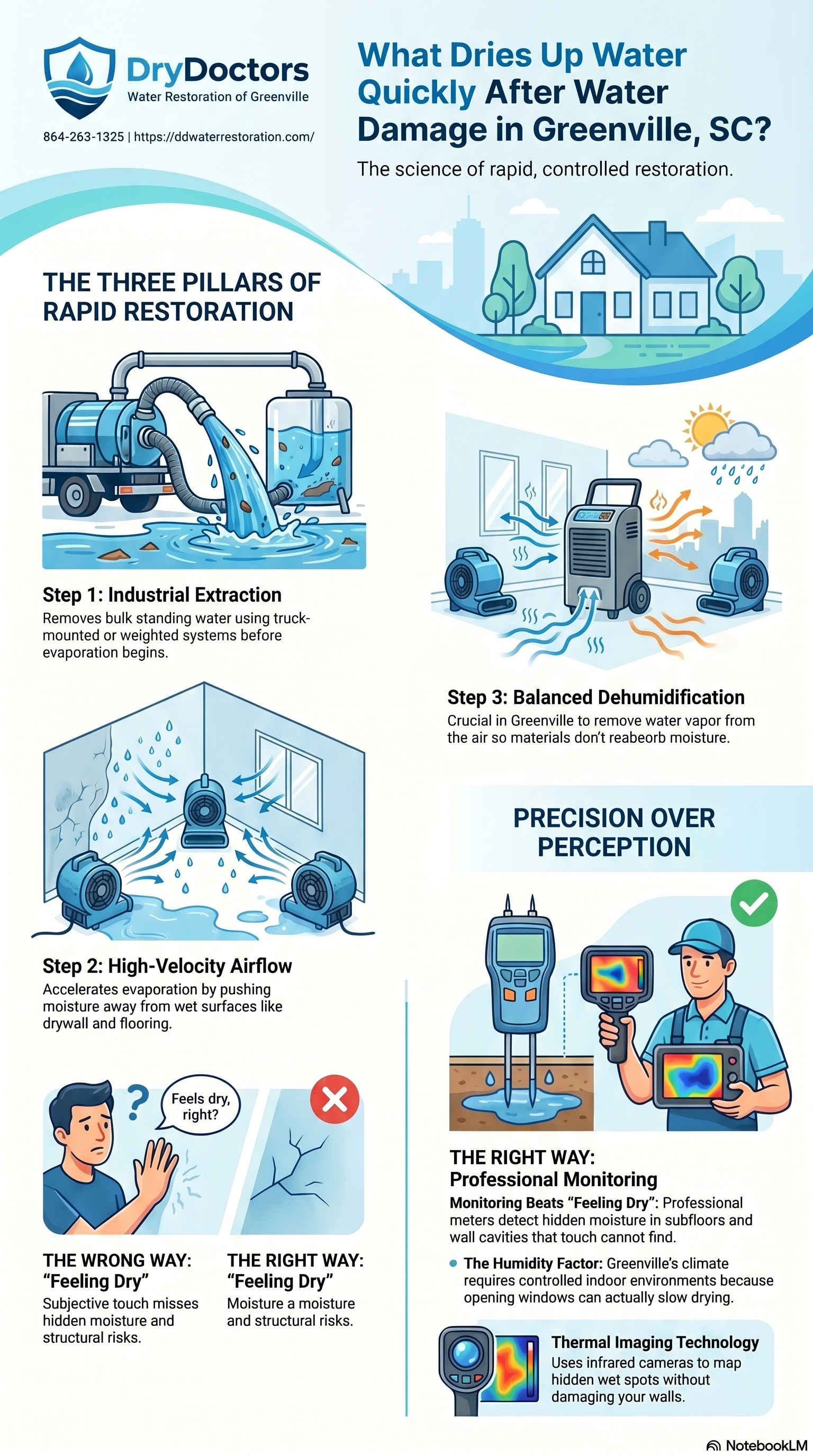
The fastest drying begins with removing as much bulk water as possible before evaporation even starts.
Professional extraction methods may include:
truck-mounted extraction
weighted carpet extraction
subfloor extraction systems
specialty vacuum extraction equipment
Removing bulk water quickly matters because saturated materials continue spreading moisture deeper into assemblies over time.
The longer standing water remains:
the farther moisture migrates
the more materials absorb water
the longer structural drying takes
This is one reason emergency extraction significantly affects whether materials remain restorable.
Learn more:
https://ddwaterrestoration.com/emergency-water-removal-cleanup
Dehumidification Is What Actually Allows Fast Structural Drying
One of the least understood parts of water damage restoration is the role dehumidification plays in drying speed.
Water does not disappear during drying—it changes state.
As moisture evaporates from:
drywall
wood
concrete
carpet
insulation
…it enters the air as water vapor.
If that vapor is not removed:
the air becomes saturated
evaporation slows dramatically
trapped moisture remains inside materials
Professional dehumidifiers continuously remove water vapor from the air so materials can continue releasing moisture.
This process becomes especially critical in Greenville basements and crawl spaces where:
airflow is restricted
ambient humidity remains elevated
evaporation naturally slows
Professional Structural Drying & Dehumidification
Different Materials Dry at Different Speeds
One reason water damage restoration becomes technically complex is because materials respond differently to moisture exposure.
For example:
Drywall
Drywall absorbs moisture rapidly and can lose structural integrity if saturation becomes excessive.
Hardwood Flooring
Wood expands when wet and may cup, crown, or warp depending on moisture imbalance.
Concrete
Concrete may appear dry while continuing to emit moisture vapor for extended periods.
Insulation
Certain insulation types trap moisture and lose thermal effectiveness once saturated.
The Gypsum Association’s publication on assessing water damage to gypsum board explains that moisture exposure duration heavily affects whether drywall remains salvageable.
Why Greenville Homes Often Dry More Slowly
Greenville’s climate creates unique drying challenges compared to drier regions.
Several local factors slow evaporation:
elevated outdoor humidity
frequent storm systems
crawl space moisture migration
older housing stock
shaded wooded lots
slab and below-grade moisture retention
This means homes in Upstate South Carolina often require:
longer dehumidification periods
more aggressive airflow strategies
closer moisture monitoring
A structure that might dry naturally in a low-humidity climate may remain wet significantly longer in Greenville conditions.
Faster Drying Helps Prevent Mold Growth
Water damage becomes much more serious when elevated moisture remains inside building materials.
The CDC and Change the Air Foundation both emphasize that prolonged moisture exposure creates conditions favorable for mold growth and indoor environmental concerns.
The Gypsum Association’s mold prevention guidance also notes that controlling moisture quickly is one of the most important factors in preventing fungal amplification on building materials.
This is why professional drying focuses not just on removing visible water, but on controlling the moisture environment throughout the structure.
Why Moisture Monitoring Matters More Than “Feeling Dry”
One of the most dangerous assumptions after water damage is believing a material is dry because it feels dry to the touch.
In reality:
subfloors may remain wet beneath flooring
framing may retain internal moisture
wall cavities may trap vapor
insulation may remain saturated
Professional restoration uses:
moisture meters
thermal imaging
psychrometric measurements
humidity monitoring
to determine actual drying progress.
The restoration industry increasingly relies on data-driven moisture measurement because hidden moisture is often what leads to long-term structural and microbial problems.
Restoration & Remediation Magazine has published extensively on the importance of psychrometry and moisture science in structural drying.
The Goal Is Not Just Fast Drying — It’s Controlled Drying
Trying to dry materials too aggressively without environmental control can sometimes create additional damage.
For example:
hardwood flooring can crack
drywall can deform
rapid heat changes can affect materials unevenly
Proper structural drying is designed to:
remove moisture efficiently
stabilize the environment
reduce secondary damage
preserve restorable materials
The best drying systems balance:
airflow
temperature
humidity
evaporation rates
rather than simply “blasting air” into the structure.
Bottom Line
What dries up water quickly after water damage is not a single machine or shortcut.
Fast and effective drying happens when:
standing water is extracted quickly
airflow accelerates evaporation
dehumidifiers remove moisture vapor
humidity is controlled
hidden moisture is monitored throughout the structure
In Greenville, SC, humidity and regional moisture conditions make professional structural drying especially important because water remains trapped longer than many homeowners realize.
The faster moisture is controlled, the better the chances of preventing structural deterioration, mold growth, and permanent material damage.
Need fast water damage drying in Greenville, SC?
DryDoctors Water Restoration of Greenville provides 24/7 emergency extraction, structural drying, moisture monitoring, and restoration services throughout Upstate South Carolina.
📞 864-263-1325
📍 https://maps.app.goo.gl/ZTPxnC2QwHb24t6K6
🌐 https://ddwaterrestoration.com/
Main Points and Common FAQ's around this topic:
The fastest way to dry water after water damage is through a combination of water extraction, airflow, and dehumidification. Removing standing water quickly reduces saturation, while airflow increases evaporation and dehumidifiers remove moisture from the air. In Greenville, SC, humidity slows natural drying, so professional structural drying often requires moisture monitoring and environmental control to prevent hidden moisture, mold growth, and structural damage.
How long does it take for water damage to dry?
Drying time depends on the amount of water, humidity levels, material saturation, and airflow conditions. In Greenville, SC, humidity often slows natural evaporation, so professional drying may take several days depending on the structure.
Do fans dry water damage quickly?
Fans help increase evaporation, but airflow alone does not remove moisture from the structure. Proper drying also requires dehumidification and moisture monitoring to remove water vapor from the air and prevent materials from reabsorbing moisture.
What removes moisture fastest after flooding?
Professional extraction equipment combined with structural drying systems removes moisture the fastest. This process may include truck-mounted extraction, commercial dehumidifiers, air movers, and moisture mapping technology.
Why does water damage take so long to dry?
Water spreads into drywall, flooring, framing, and insulation. Even when surfaces look dry, hidden moisture may remain trapped inside structural materials, especially in humid environments like Greenville, SC.
Can opening windows help dry water damage?
Sometimes, but not always. In humid climates like Upstate South Carolina, opening windows can introduce additional moisture into the home and slow drying conditions rather than improve them.
Water damage dries fastest when extraction, airflow, and dehumidification work together to remove both visible water and hidden moisture from the structure. In Greenville, SC, humidity slows natural drying, making controlled structural drying critical for preventing mold growth and long-term damage.