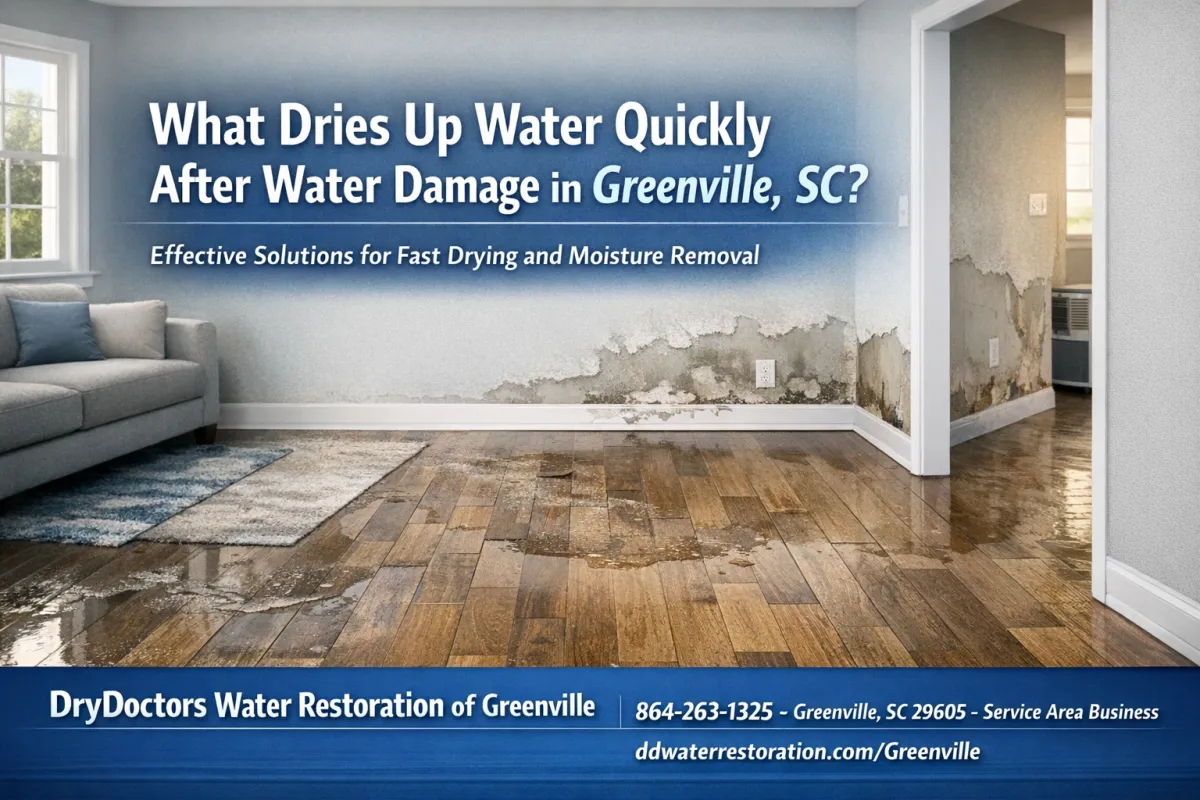
What Dries Water Quickly After Water Damage? (Greenville, SC)
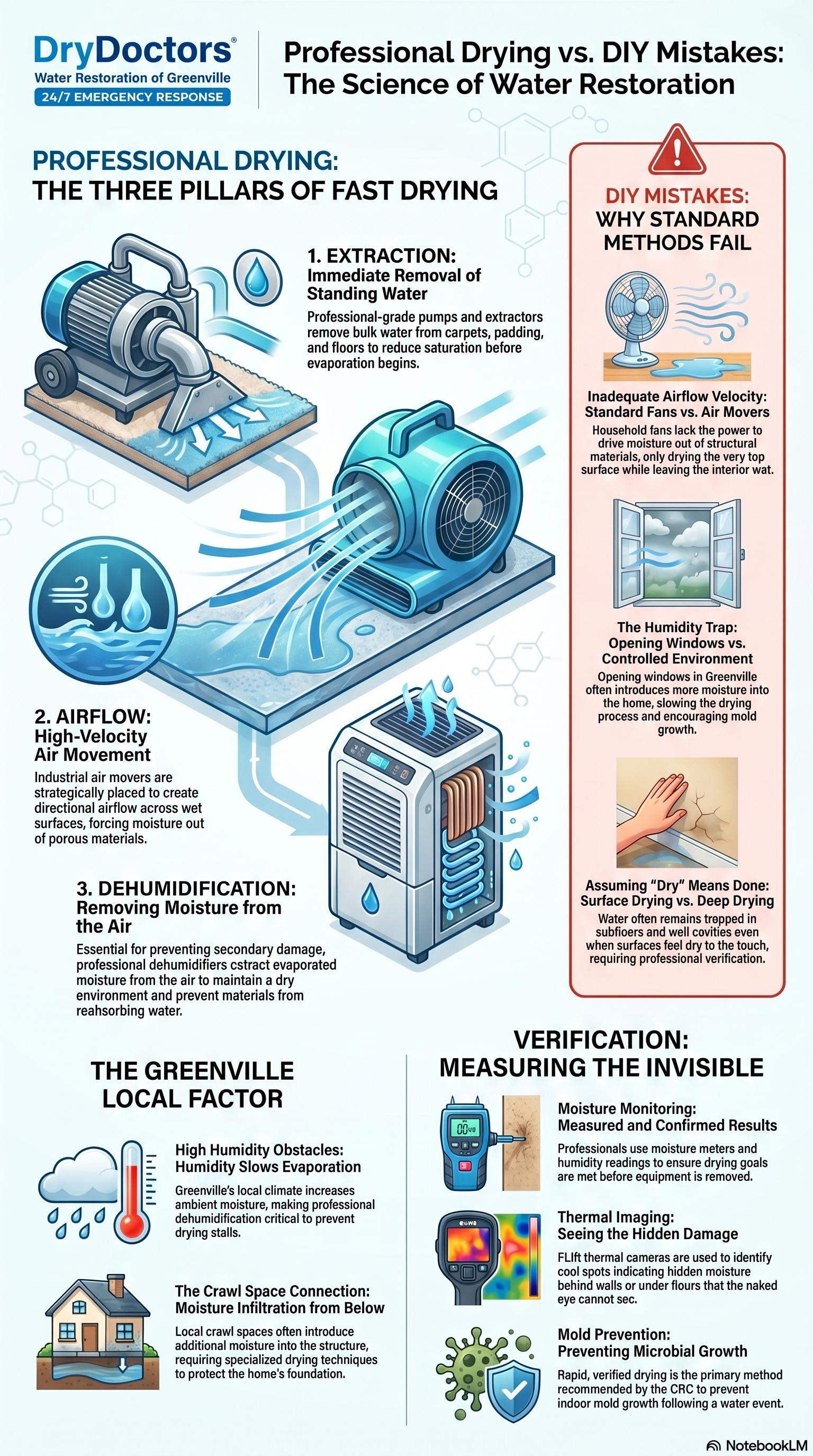
The fastest way to dry up water after water damage is by combining water extraction, high-velocity airflow, and dehumidification to remove moisture from both surfaces and the air. In Greenville, SC, humidity plays a major role, so simply using fans is not enough—effective drying requires controlling the entire environment.
Water does not just sit on surfaces—it absorbs into materials like drywall, flooring, and subfloors, which means drying must target both visible water and hidden moisture.
The Key to Fast Drying: Evaporation + Moisture Removal
Drying water quickly depends on accelerating evaporation and removing moisture from the air.
This process involves three core elements:
Airflow (to push moisture out of materials)
Dehumidification (to remove moisture from the air)
Temperature control (to increase evaporation speed)
The Institute of Inspection Cleaning and Restoration Certification S500 Standard explains that effective drying requires managing all three factors together—not individually.
Step 1: Remove Standing Water Immediately
The fastest drying starts with removing bulk water.
This includes:
pumping out standing water
extracting water from carpets and padding
removing pooled water from floors
This step reduces saturation and allows evaporation to begin.
Start here:
Emergency Water Removal & Cleanup
Step 2: Use High-Velocity Airflow
Airflow is what actually drives water out of materials.
Professional drying uses:
air movers
directional airflow across wet surfaces
strategic placement for maximum coverage
Air movement:
increases evaporation
prevents moisture from settling
speeds up surface drying
However, airflow alone does not remove moisture—it only moves it.
Step 3: Remove Moisture From the Air (Critical Step)
As water evaporates, it enters the air.
If that moisture is not removed:
humidity rises
drying slows down
materials can reabsorb moisture
This is why dehumidifiers are essential.
They:
extract moisture from the air
maintain drying conditions
prevent secondary damage
Learn more:
Professional Structural Drying & Dehumidification
Step 4: Understand That Materials Hold Water Internally
One of the biggest mistakes is assuming water is gone when surfaces are dry.
In reality:
drywall absorbs water internally
wood holds moisture within fibers
subfloors trap water beneath surfaces
This means drying must continue until internal moisture is removed—not just surface water.
Step 5: Control Temperature for Faster Drying
Temperature plays a major role in how quickly water evaporates.
warmer air holds more moisture
increased temperature speeds evaporation
controlled heat improves drying efficiency
However, temperature must be balanced with dehumidification to avoid trapping moisture in the air.
Step 6: Greenville’s Humidity Slows Drying
In Greenville, SC, drying water quickly is more difficult because:
high humidity slows evaporation
crawl spaces introduce moisture into the home
seasonal weather increases ambient moisture
This means:
natural drying takes longer
improper drying leaves hidden moisture
professional drying methods become more important
Step 7: Drying Must Be Verified, Not Assumed
The IICRC emphasizes that drying must be measured and confirmed.
This includes:
moisture meters
humidity readings
daily monitoring
“Drying equipment should remain until drying goals are achieved.”
Without verification, moisture can remain hidden inside materials.
Step 8: When Fast Drying Prevents Bigger Damage
Drying water quickly is critical because delayed drying can lead to:
material breakdown
warping and deformation
microbial growth (mold)
permanent structural damage
The Centers for Disease Control and Prevention highlights moisture control as essential to preventing mold growth indoors.
What Does NOT Dry Water Effectively
Many homeowners try:
standard fans
opening windows
household dehumidifiers
These methods are limited because they:
lack sufficient airflow
cannot control humidity properly
do not address hidden moisture
https://www.podbean.com/eas/pb-68hps-1a9c6f8
Bottom Line
The fastest way to dry water after water damage is by combining extraction, airflow, and dehumidification in a controlled environment.
Drying is not just about removing visible water—it is about removing moisture from inside the structure.
In Greenville, humidity makes this process more complex, which is why proper drying methods are critical.
Need fast water damage drying in Greenville, SC?
DryDoctors Water Restoration of Greenville provides 24/7 emergency response, professional extraction, structural drying, and moisture monitoring.
📞 864-263-1325
📍 https://maps.app.goo.gl/ZTPxnC2QwHb24t6K6
🌐 https://ddwaterrestoration.com/