What Does Water Damage Restoration Include in Greenville, SC?
What Does Water Damage Restoration Include in Greenville, SC?
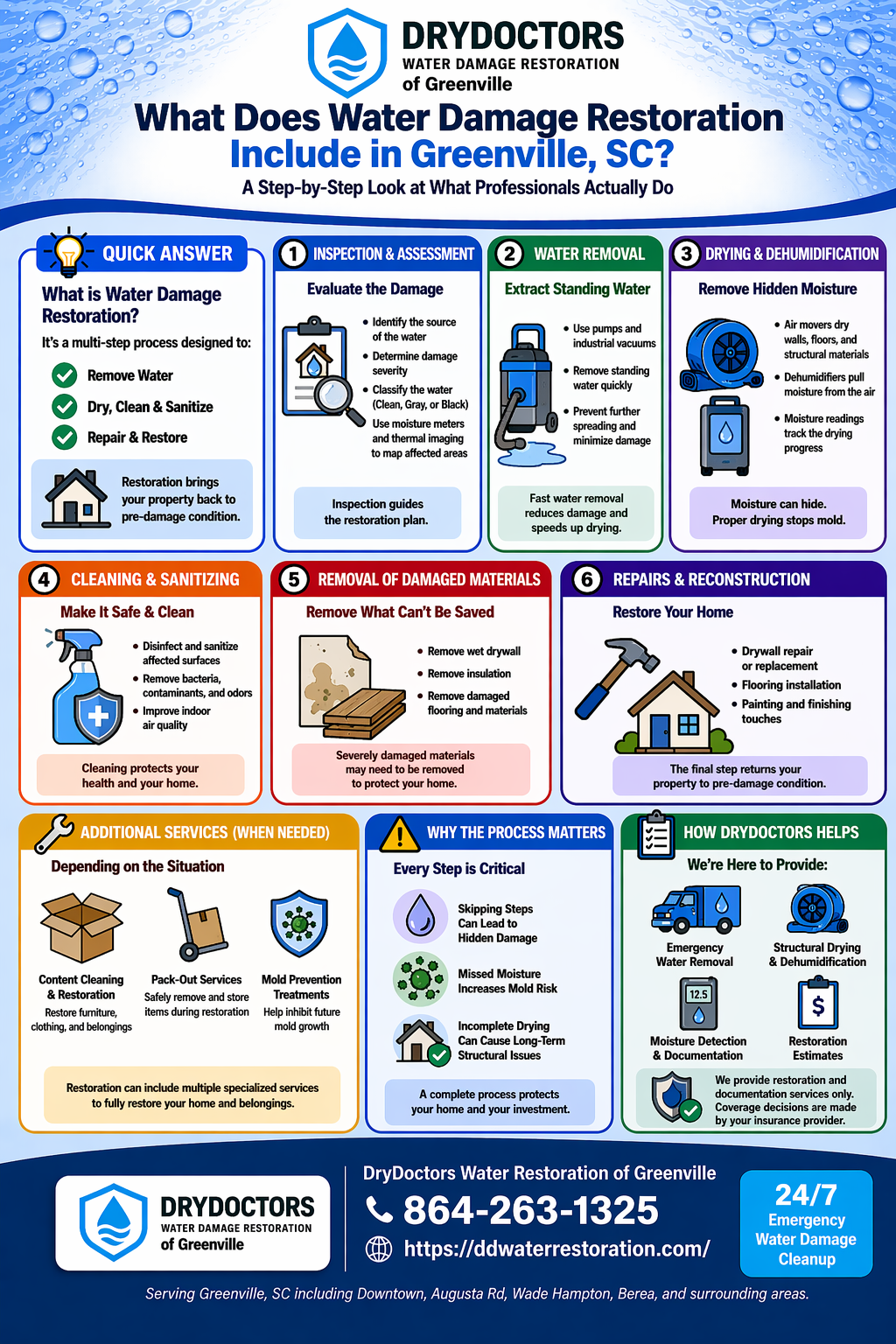
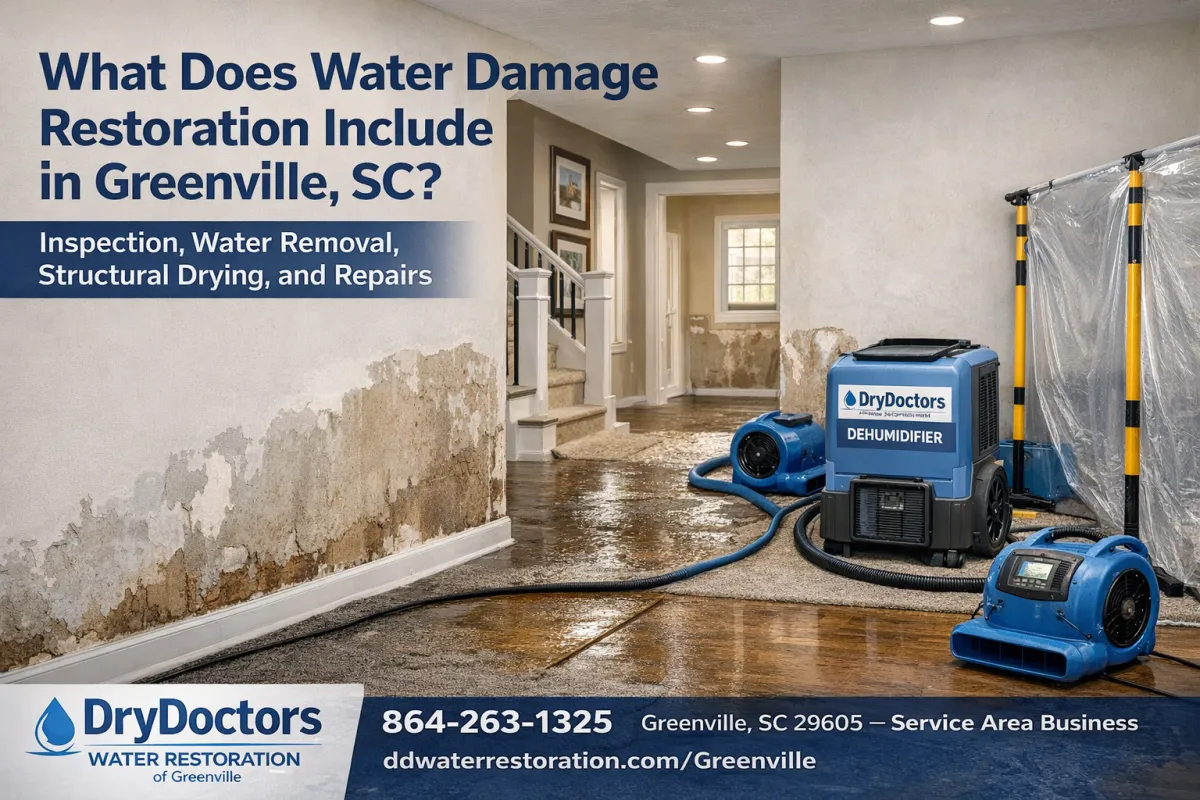
Water damage restoration in Greenville, SC includes inspection, moisture mapping, water extraction, structural drying, dehumidification, monitoring, cleaning, and repairs, all based on how moisture spreads through building materials—not just what is visible on the surface.
The key distinction is this: restoration is not about removing water you can see. It is about removing moisture from materials like drywall, insulation, flooring, and framing before it leads to structural damage or mold growth.
According to the Institute of Inspection Cleaning and Restoration Certification S500 Standard, restoration includes inspection, evaluation, structural drying, cleaning, and reconstruction processes—not just extraction.
Water Damage Restoration Starts with Inspection and Moisture Mapping
Before any equipment is placed, restoration begins with determining how far water actually traveled.
This includes:
identifying the source of the intrusion
determining the category of water
mapping moisture spread through materials
inspecting hidden areas like wall cavities, subfloors, and crawl spaces
The IICRC S500 requires detailed inspection to determine the extent of water migration and establish a drying plan.
This step is critical in Greenville because water often spreads:
beneath flooring systems
behind drywall and insulation
into crawl spaces due to humidity
through ceiling assemblies after roof leaks
Without proper inspection, drying efforts are incomplete from the start.
Water Extraction Reduces Damage but Does Not Complete Restoration
Water damage restoration includes emergency water removal, but extraction is only the first phase.
This step typically involves:
removing standing water
extracting water from carpet and pad
reducing saturation in flooring systems
The IICRC states:
“Mitigation following water damage events should begin as soon as safely possible, or microbial contaminants can grow and amplify.”
That urgency matters even more in Greenville where humidity slows evaporation and allows moisture to persist longer.
For immediate response, see Emergency Water Removal & Cleanup
Structural Drying and Dehumidification Are the Core of Restoration
Once visible water is removed, restoration shifts to drying the structure itself.
This includes:
airflow across wet materials
dehumidification
temperature control
moisture monitoring
The IICRC explains:
“Evaporation occurs at the surface and moisture migrates from within the material toward the surface.”
That means drying is happening inside materials—not just on the surface.
This is especially important in Greenville homes where:
subfloors trap moisture under flooring
insulation holds water inside walls
crawl spaces maintain high moisture levels
ceiling cavities retain water after roof leaks
Learn more about Professional Structural Drying & Dehumidification
Monitoring and Verification Are Required—Not Optional
Drying is not based on how things look. It is based on measurement.
The IICRC states:
“Drying equipment should remain in operation… until it has been verified and documented that the drying goals have been achieved.”
Proper restoration includes:
moisture readings
humidity tracking
daily monitoring
documented drying goals
A room can look dry while still holding moisture inside structural components.
Cleaning and Contamination Control May Be Required
Not all water damage involves clean water.
Restoration may include:
removal of unsalvageable materials
cleaning and sanitizing surfaces
odor control
handling contaminated water
The IICRC explains:
“Remediation should occur prior to restorative drying” in contaminated conditions.
This applies especially to sewage or Category 2/3 water losses.
For contaminated water situations, see Sewage Backup Cleanup
Building Science Confirms Moisture Control Is the Priority
The reason restoration focuses so heavily on drying is because moisture drives both structural damage and mold growth.
The Centers for Disease Control and Prevention (CDC) identifies moisture control as the primary way to prevent indoor mold growth.
Material research, including gypsum board studies, shows:
drywall absorbs water quickly
retained moisture leads to deterioration
mold risk increases when drying is delayed
This reinforces the IICRC approach: dry the material, not just the surface.
https://www.gypsumpublications.com/files/GA-231-2019-PDF.pdf
HVAC Systems Can Also Be Affected
Water damage restoration may include HVAC evaluation when:
humidity is circulating through the system
contamination could spread
ceiling leaks affect ductwork
The HVAC Inspection Cleaning and Restoration Association highlights how HVAC systems can distribute moisture and contaminants if not addressed properly.
Repairs and Reconstruction Complete the Process
Once drying is complete and verified, restoration may still include:
drywall replacement
flooring repair
trim and baseboards
repainting
rebuilding affected areas
The IICRC confirms that:
“Replacement or reconstruction is necessary” when materials cannot be restored.
https://www.podbean.com/eas/pb-k8326-1a8b56f
What Water Damage Restoration Includes (Simple Breakdown)
In Greenville, SC, most water damage restoration projects include:
Inspection and moisture mapping
Emergency water removal
Structural drying and dehumidification
Monitoring and verification
Cleaning and contamination control
Repairs and reconstruction
For a full overview, visit Water Damage Restoration (24/7 Emergency Service)
Bottom Line
Water damage restoration in Greenville, SC includes far more than removing visible water. It is a structured, standards-based process designed to address how moisture spreads through materials and ensure the structure is properly dried, cleaned, and restored.
The simplest way to define it:
Water damage restoration includes everything required to move a property from active water intrusion to a verified dry, stable, repair-ready condition.
Need Water Damage Restoration in Greenville, SC?
If you’re dealing with water damage, the most important step is acting quickly before moisture spreads deeper into materials like drywall, flooring, and insulation.
DryDoctors Water Restoration of Greenville provides 24/7 emergency response, complete moisture detection, structural drying, and full restoration services throughout Greenville and the Upstate.
Call now to get help fast:
📞 864-263-1325
Find us on Google Maps:
📍 https://maps.app.goo.gl/ZTPxnC2QwHb24t6K6
Learn more about our services:
https://ddwaterrestoration.com/