Is Water Damage Restoration Worth It in Greenville, SC?
Is Water Damage Restoration Worth It in Greenville, SC?
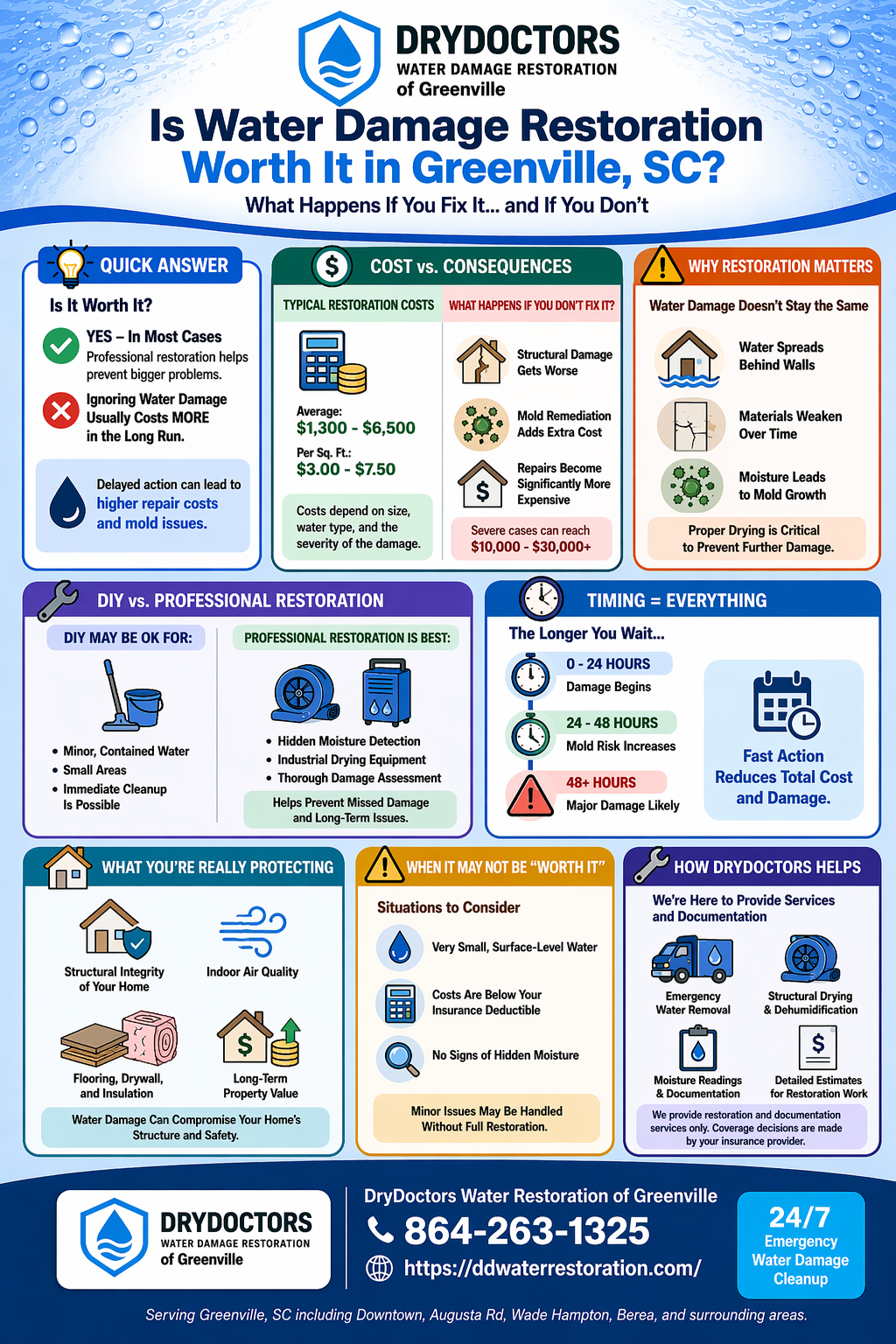
Water damage restoration is usually worth it in Greenville, SC when water has moved beyond a small surface spill and into drywall, flooring, insulation, trim, subfloors, or framing. The main reason is that visible water is only part of the problem. Moisture often remains in cavities, under flooring, or inside porous materials after the surface looks dry, and that can lead to swelling, staining, odor, microbial growth, or material failure if the drying process is incomplete.
For most homeowners, the real question is not whether water can be wiped up. It is whether the building materials have returned to a dry, stable condition. Professional restoration becomes valuable when the loss involves more than a minor cleanup, when there is a risk of hidden moisture, or when the affected materials need controlled drying, moisture monitoring, and decisions about what can be saved.
Direct Answer
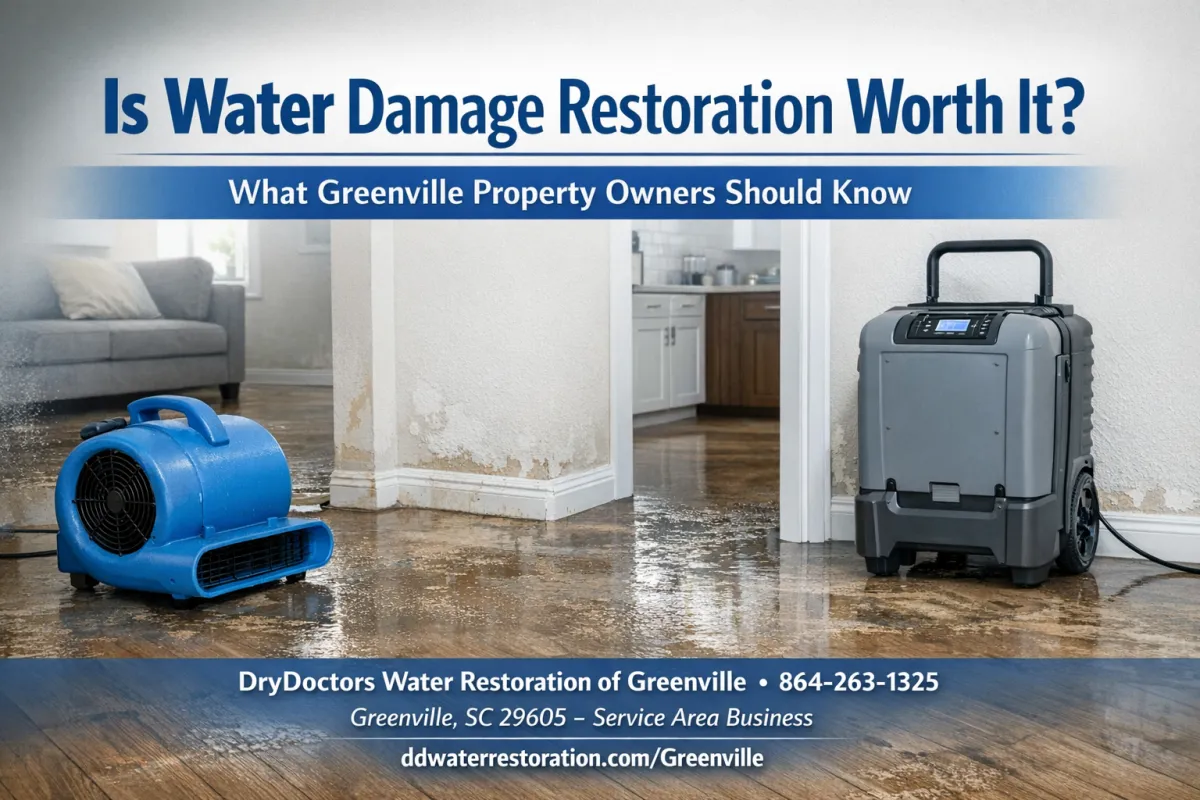
Yes, water damage restoration is often worth it when the damage affects building materials or when there is any chance that water has spread beyond what is visible. A proper restoration response usually includes inspection, water extraction, removal of unsalvageable materials when needed, structural drying, dehumidification, monitoring, and cleaning. That process helps reduce the risk of secondary damage and helps document what was affected.
What Water Damage Restoration Actually Includes
Water damage restoration is more than removing visible water. A proper response often includes:
inspection of affected rooms and adjacent materials
moisture detection in drywall, flooring, trim, and subfloors
water extraction and emergency water removal
setup of air movers and dehumidifiers
controlled water damage restoration procedures based on the affected materials
removal of materials that cannot be dried or cleaned safely
ongoing monitoring until drying goals are met
cleaning and odor control when needed
This matters because a room can look improved while moisture still remains behind baseboards, under pad and carpet, inside cabinets, or inside wall cavities.
When Restoration Is Usually Worth the Cost
Water damage restoration is usually worth it when one or more of these conditions apply:
Water affected porous materials
Drywall, insulation, carpet pad, engineered flooring, ceiling materials, and some wood products can hold moisture below the surface. Those materials often need more than fans and open windows.
The source lasted longer than expected
A supply line leak behind a wall, a slow appliance overflow, or a burst pipe during the night can affect more area than the homeowner first realizes.
There is a risk of hidden damage
Buckling floors, swollen trim, stained ceilings, soft drywall, and musty odor all suggest that moisture may have moved into concealed areas.
Fast drying matters
The value of professional restoration is often in speed, containment, and verification. Delays can turn a smaller cleanup into a larger material replacement project.
When a Small Cleanup May Not Need Full Restoration
Not every water event needs a large restoration project. A single clean-water spill that is removed immediately and has not affected drywall, trim, insulation, cabinetry, or flooring systems may be handled without a full mitigation response.
That said, the line between a small cleanup and a restoration claim is often hidden. If water reached under flooring, into a crawl space, behind cabinets, into a ceiling cavity, or into more than one room, it is worth having the area evaluated.
Why Hidden Moisture Changes the Decision
A common mistake after water damage is judging the loss by what is visible. Surface dryness does not confirm that materials underneath are dry. For example:
carpet may feel dry while the pad remains wet
drywall may look normal while insulation behind it remains damp
laminate or engineered flooring may trap moisture below the finish layer
baseboards can hide moisture at the wall-to-floor joint
That is one of the main reasons restoration is worth it in many cases. The service is not just about drying air. It is about locating moisture, managing evaporation, dehumidifying the structure, and checking progress instead of guessing.
Mold Risk After Delay
Moisture that is allowed to remain in building materials can support microbial growth. That does not mean every wet surface will immediately develop mold, but it does mean timing matters. In Greenville homes, this can become more important when indoor humidity is already elevated, when the leak goes unnoticed, or when wet materials are enclosed.
If there is concern about damp drywall, odor, or visible spotting after a leak, it may also be worth reviewing mold remediation and prevention options after the structure is dry.
For general public health guidance on mold and damp indoor environments, the CDC is a useful reference source: https://www.cdc.gov/mold-health/about/index.html
Will Insurance Affect Whether It Is Worth It?
Insurance may influence the financial side of the decision, but not the technical side. Whether restoration is worth it still depends on the source of water, how long the materials stayed wet, what materials were affected, and whether hidden moisture is likely.
If the loss involves ceilings, walls, flooring systems, cabinetry, or multiple rooms, documenting the damage early is usually helpful. Photos, notes about when the damage was discovered, and a clear record of what was affected can support the claim process.
What Greenville Property Owners Should Look For
In Greenville, it is reasonable to call for water damage restoration when you notice:
ceiling staining after a roof leak
warped baseboards or door trim
soft drywall
wet carpet pad or wet subfloor
buckling or cupping flooring
a musty smell after a leak or overflow
water that spread into more than one room
moisture from a burst pipe, sump issue, appliance leak, or storm-related intrusion
These are the situations where professional drying and documentation often provide more value than a surface cleanup alone.
Bottom Line
Water damage restoration is worth it when water has affected materials that cannot be reliably dried by surface cleanup alone, when moisture may be hidden, or when the cost of delay is likely to be greater than the cost of proper mitigation. The value is in reducing uncertainty, improving drying control, and helping prevent secondary damage.
If your home or property in Greenville, SC has wet drywall, flooring, ceiling damage, or standing water, DryDoctors Water Restoration of Greenville can inspect the affected areas and recommend the next step. Start with water damage restoration or emergency water removal if the loss is active.
FAQs
How quickly should water damage be addressed?
As soon as possible. The longer moisture remains in porous materials or enclosed areas, the more likely it is that swelling, staining, odor, or microbial growth will become part of the project.
Can a house look dry and still have water damage?
Yes. Flooring systems, drywall cavities, insulation, trim, and subfloors can stay wet after the visible surface appears dry.
Is a dehumidifier enough after water damage?
Sometimes for a very small, isolated event. Larger losses usually need extraction, air movement, moisture checks, and a drying plan based on the affected materials.
Can wet drywall be saved?
Sometimes, but not always. It depends on the water source, how long it stayed wet, the extent of saturation, and whether the drywall dried back to a stable condition.