How to Tell If You Have Mold After Water Damage (Greenville, SC)
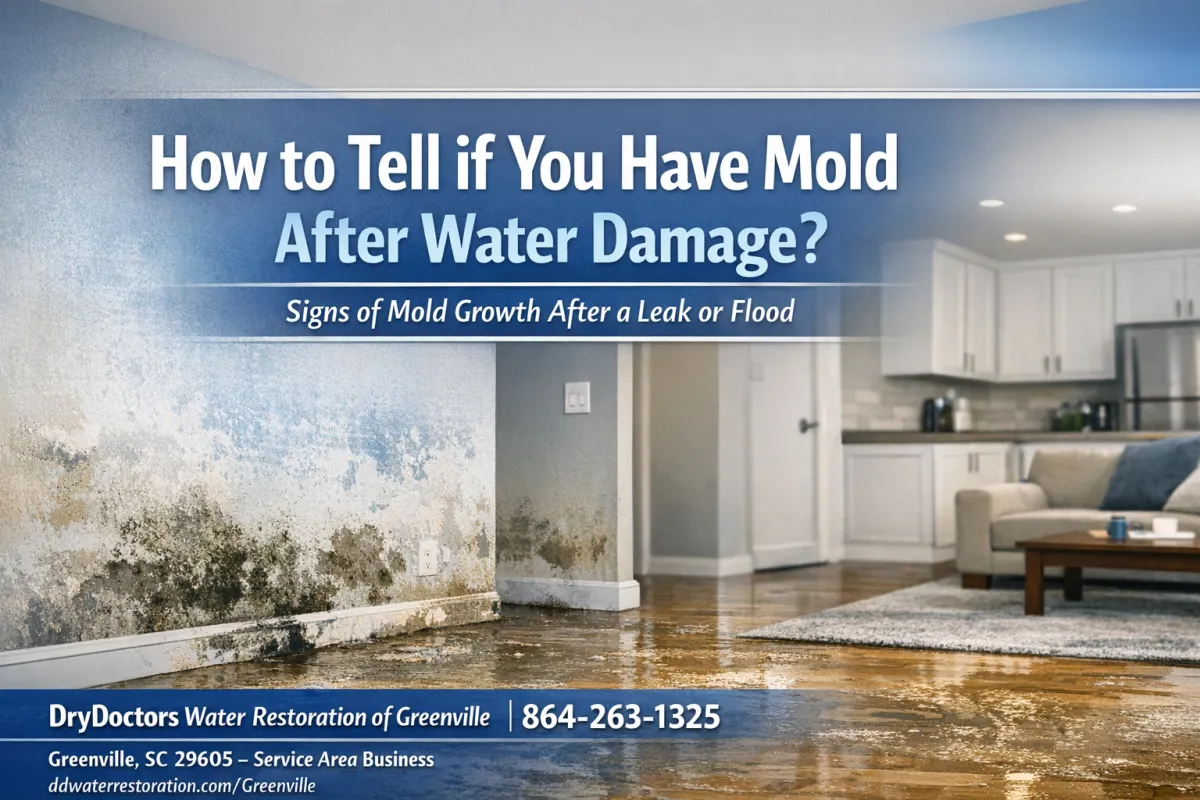
How to Tell If You Have Mold After Water Damage in Greenville, SC
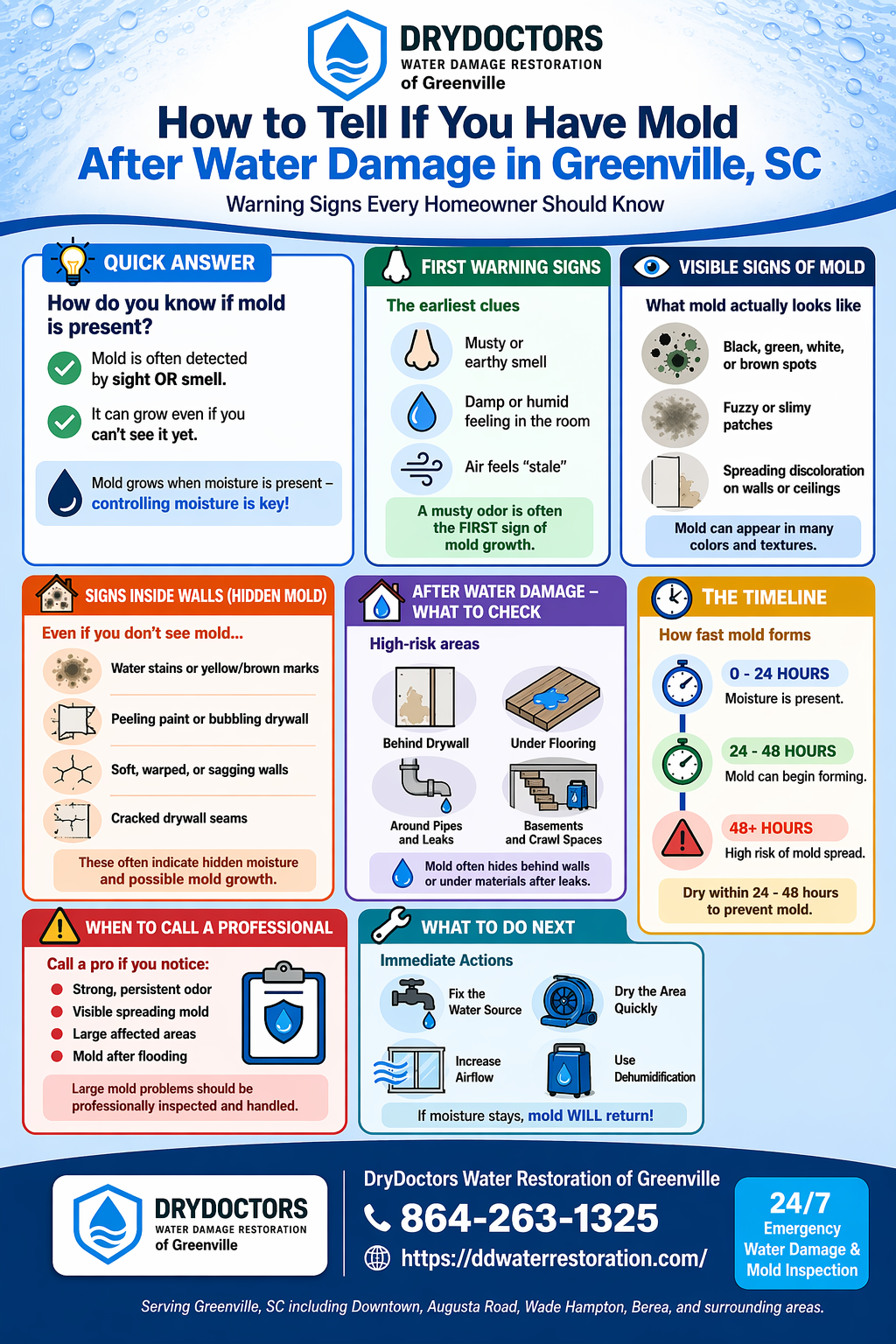
You can tell if you have mold after water damage by looking for musty odors, visible staining or growth, increased humidity, or signs of hidden moisture inside walls, flooring, insulation, or crawl spaces. In many Greenville homes, mold develops out of sight first, especially when materials stay damp after a water event.
The most important factor is not whether water was present—it’s how long moisture remained inside building materials.
Mold Starts With Moisture That Was Never Fully Removed
Mold growth after water damage is not random. It follows a predictable pattern based on moisture retention and material saturation.
The Institute of Inspection Cleaning and Restoration Certification S500 and S520 standards emphasize that microbial growth becomes a concern when materials remain wet long enough for conditions to support it.
In practical terms:
drywall absorbs and holds moisture internally
insulation traps moisture behind walls
subfloors retain water beneath finished flooring
crawl spaces hold humidity under the structure
If drying is incomplete, mold conditions can begin even when surfaces appear dry.
The First Sign Is Often a Musty Odor
One of the earliest indicators of mold is a persistent musty smell.
This happens because mold releases microbial volatile organic compounds (MVOCs) as it grows. These gases create a noticeable odor even before visible growth appears.
In Greenville homes, this is especially common:
after basement or crawl space flooding
behind walls after pipe leaks
under flooring after appliance leaks
If you notice a musty smell that doesn’t go away, it often means hidden moisture is still active somewhere in the structure.
Visible Signs: Staining, Discoloration, or Growth
As mold develops, it may become visible.
Common signs include:
dark spots on drywall or ceilings
discoloration around baseboards or trim
staining on subfloors or framing
growth on HVAC vents or registers
However, visible mold is often only a small portion of the actual problem.
The Centers for Disease Control and Prevention notes that mold can grow in hidden areas where moisture is present.
Hidden Mold Is the Most Common Scenario
In many water damage cases, mold develops in places you cannot see:
inside wall cavities
beneath flooring systems
inside insulation
behind cabinets
in crawl spaces
This is why inspection matters.
Water moves through materials via capillary action and absorption. Once inside, it can remain trapped unless properly dried using structural drying methods.
Learn how drying works:
Professional Structural Drying & Dehumidification
Increased Humidity and Condensation
Another sign of potential mold conditions is elevated indoor humidity.
You may notice:
condensation on windows
damp or sticky air
slow drying of surfaces
recurring moisture in the same areas
This indicates that moisture is still present in the structure or environment.
Organizations like the National Institute of Building Sciences highlight that controlling moisture is essential to preventing microbial growth in buildings.
Time Is a Critical Factor
Mold does not require standing water—it requires time and moisture.
The IICRC explains that:
microbial growth can begin when materials remain wet
delayed drying increases contamination risk
This is why fast response matters.
If water damage is not addressed quickly, the risk shifts from:
water damage
towater + microbial contamination
Greenville-Specific Conditions That Increase Mold Risk
In Greenville and Upstate South Carolina, certain conditions make mold more likely after water damage:
high humidity slows evaporation
crawl spaces trap moisture under homes
older homes may have less vapor control
mixed flooring systems hold moisture underneath
frequent storms increase water intrusion risks
These conditions make it easier for moisture to remain trapped long enough for mold to develop.
When Mold Becomes a Structural and Air Quality Issue
Mold is not just a surface issue. It can impact:
structural materials (drywall, wood framing)
indoor air quality
insulation performance
HVAC systems
The HVAC Inspection Cleaning and Restoration Association notes that HVAC systems can distribute contaminants if moisture-related issues are not addressed.
What to Do If You Suspect Mold After Water Damage
If you think mold may be present:
Identify areas with past water exposure
Look for odor, staining, or humidity issues
Avoid disturbing affected materials
Have moisture levels evaluated
Address the source of moisture
Learn more about water damage response:
Water Damage Restoration (24/7 Emergency Service)
https://www.podbean.com/eas/pb-9zddz-1a95cad
Bottom Line
You can tell if you have mold after water damage by identifying persistent moisture conditions, musty odors, visible staining, or hidden damp materials.
The real issue is not just mold—it is unresolved moisture inside the structure.
If moisture is not fully removed, mold becomes a natural outcome of the environment.
Need Help in Greenville, SC?
If you suspect mold after water damage, acting quickly helps prevent further spread and deeper structural impact.
DryDoctors Water Restoration of Greenville provides moisture detection, structural drying, and post-water damage remediation services.
📞 864-263-1325
📍 https://maps.app.goo.gl/ZTPxnC2QwHb24t6K6
🌐 https://ddwaterrestoration.com/