How to Tell If Water Damage Is Permanent in Greenville, SC
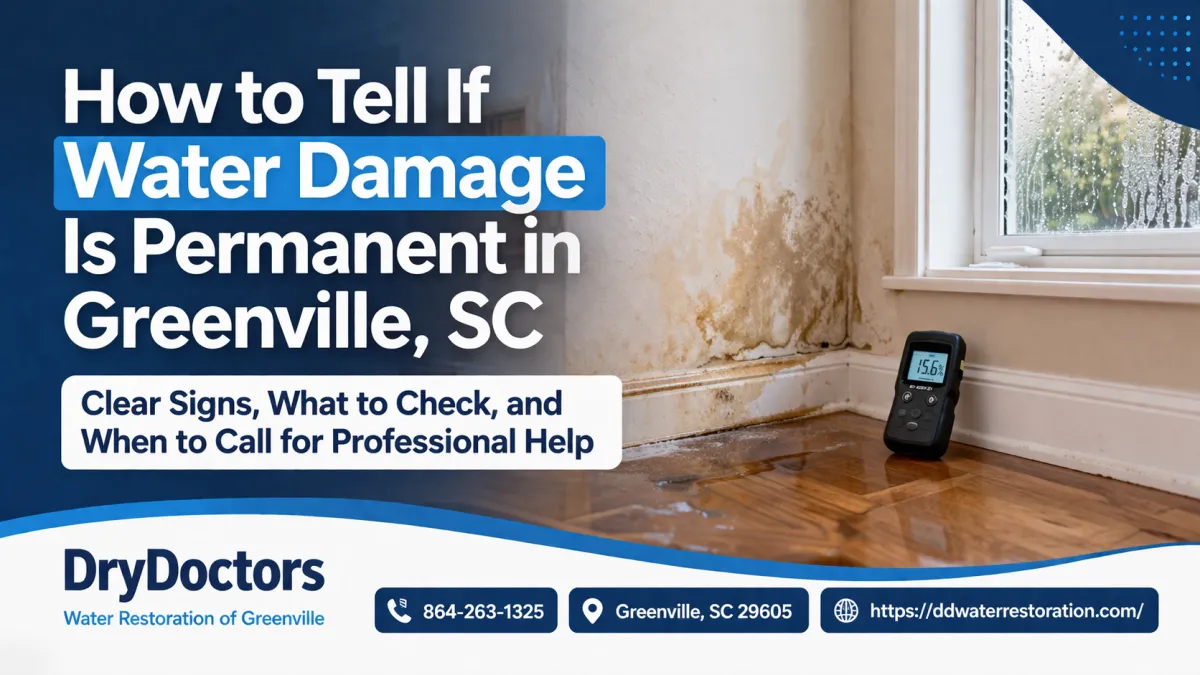
How to Tell If Water Damage Is Permanent in Greenville, SC
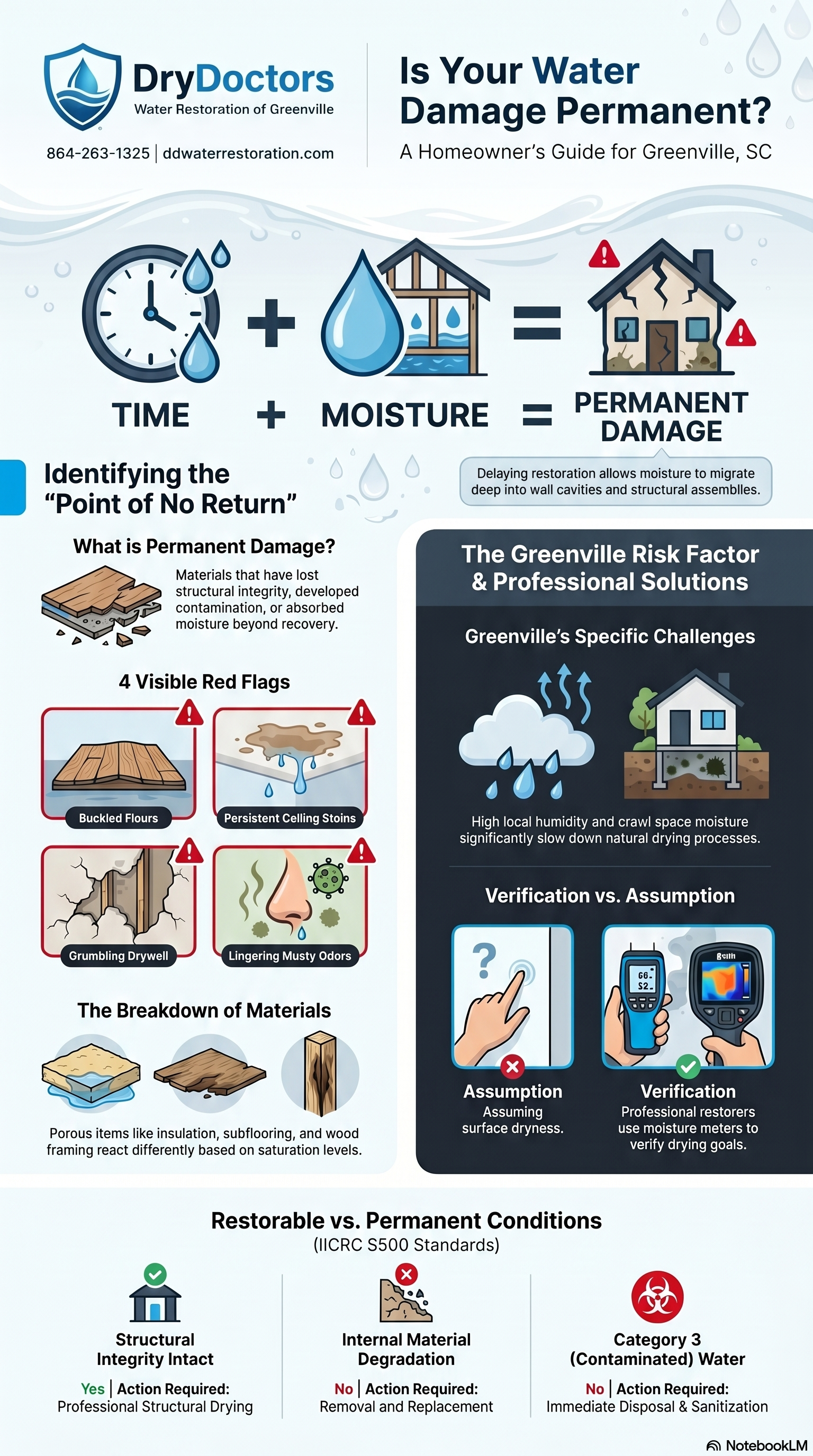
You can tell if water damage is permanent when materials have absorbed moisture beyond recovery, lost structural integrity, or developed contamination that cannot be safely removed. In many Greenville homes, what looks like minor damage on the surface may actually be permanent at the structural level.
The key distinction is this:
Temporary water damage can be dried and restored. Permanent water damage involves material breakdown, contamination, or irreversible deformation.
Water Damage Becomes Permanent When Materials Break Down
Water damage is not just about water—it’s about how materials respond to moisture over time.
Materials like:
drywall
wood framing
subflooring
insulation
flooring systems
all react differently depending on:
how much water they absorbed
how long they stayed wet
environmental conditions like humidity
The Institute of Inspection Cleaning and Restoration Certification S500 Standard explains that materials must be evaluated based on whether they can return to a pre-loss condition after drying.
If they cannot, the damage is considered non-restorable (permanent).
Visible Signs That Water Damage May Be Permanent
Some of the clearest indicators include:
1. Warping or Structural Deformation
buckled flooring
swollen baseboards
bowed drywall
This happens when materials expand and do not return to their original shape.
2. Persistent Staining or Discoloration
yellow/brown ceiling stains
darkened wood
water lines on drywall
These stains indicate deep material saturation, not just surface exposure.
3. Softened or Crumbling Materials
drywall that flakes or breaks apart
wood that feels soft or spongy
subfloor instability
This means the internal structure has been compromised.
4. Lingering Odors
musty or damp smells
persistent odor after drying
This often indicates:
hidden moisture
microbial growth
material breakdown
The Centers for Disease Control and Prevention notes that moisture-related damage can lead to microbial contamination affecting indoor environments.
The Most Important Factor: Time + Moisture Retention
Water damage becomes permanent when moisture remains long enough to alter the material itself.
This happens because:
water migrates inside materials (not just on surfaces)
evaporation slows in humid environments
trapped moisture leads to degradation
In Greenville, this is amplified by:
high humidity
crawl space moisture
slower drying conditions
mixed material assemblies
Why Materials Can Look Dry but Still Be Permanently Damaged
One of the biggest misconceptions:
“If it looks dry, it’s fine.”
In reality:
materials dry from the outside in
internal moisture can remain trapped
structural damage may already be done
The IICRC explains that drying must be measured and verified, not assumed.
Learn more:
Professional Structural Drying & Dehumidification
When Water Damage Crosses the Line Into Permanent Damage
Water damage typically becomes permanent when:
drying is delayed
materials remain saturated too long
contamination is present (Category 2 or 3 water)
structural integrity is compromised
At that point:
drying alone is not enough
removal and replacement are required
Hidden Permanent Damage Is the Biggest Risk
In many Greenville homes, permanent damage occurs in areas you cannot see:
subfloors beneath flooring
wall cavities
insulation
crawl spaces
This is why inspection matters.
Water moves through materials via:
capillary action
absorption
gravity
And once inside, it can cause damage long before it becomes visible.
https://www.podbean.com/eas/pb-8gqza-1a97ad2
What Determines If Materials Can Be Saved
A material is typically restorable if:
moisture is removed quickly
structural integrity is intact
contamination is not present
drying goals are achieved
A material is typically permanent damage if:
it cannot return to its original condition
it has degraded internally
it poses contamination risk
Greenville-Specific Risk Factors
Permanent damage is more common in Greenville due to:
humidity slowing evaporation
crawl spaces trapping moisture
older homes with porous materials
seasonal storms causing repeated exposure
These factors increase the likelihood that moisture remains long enough to cause irreversible damage.
What to Do If You Suspect Permanent Water Damage
Identify affected areas
Check for structural changes or softness
Monitor for odor or recurring moisture
Have moisture levels tested
Determine if materials are salvageable
Start here:
Emergency Water Removal & Cleanup
Bottom Line
Water damage is permanent when materials have been altered beyond recovery due to prolonged moisture exposure, structural breakdown, or contamination.
The most important factor is not how bad the damage looks—but whether the material can return to its original condition after proper drying.
CTA
Need help determining if water damage is permanent in your Greenville home?
DryDoctors Water Restoration of Greenville provides moisture inspection, structural drying, and full restoration services.
📞 864-263-1325
📍 https://maps.app.goo.gl/ZTPxnC2QwHb24t6K6
🌐 https://ddwaterrestoration.com/