How Quickly Does Mold Grow After Water Damage in Greenville, SC?
How Quickly Does Mold Grow After Water Damage in Greenville, SC?
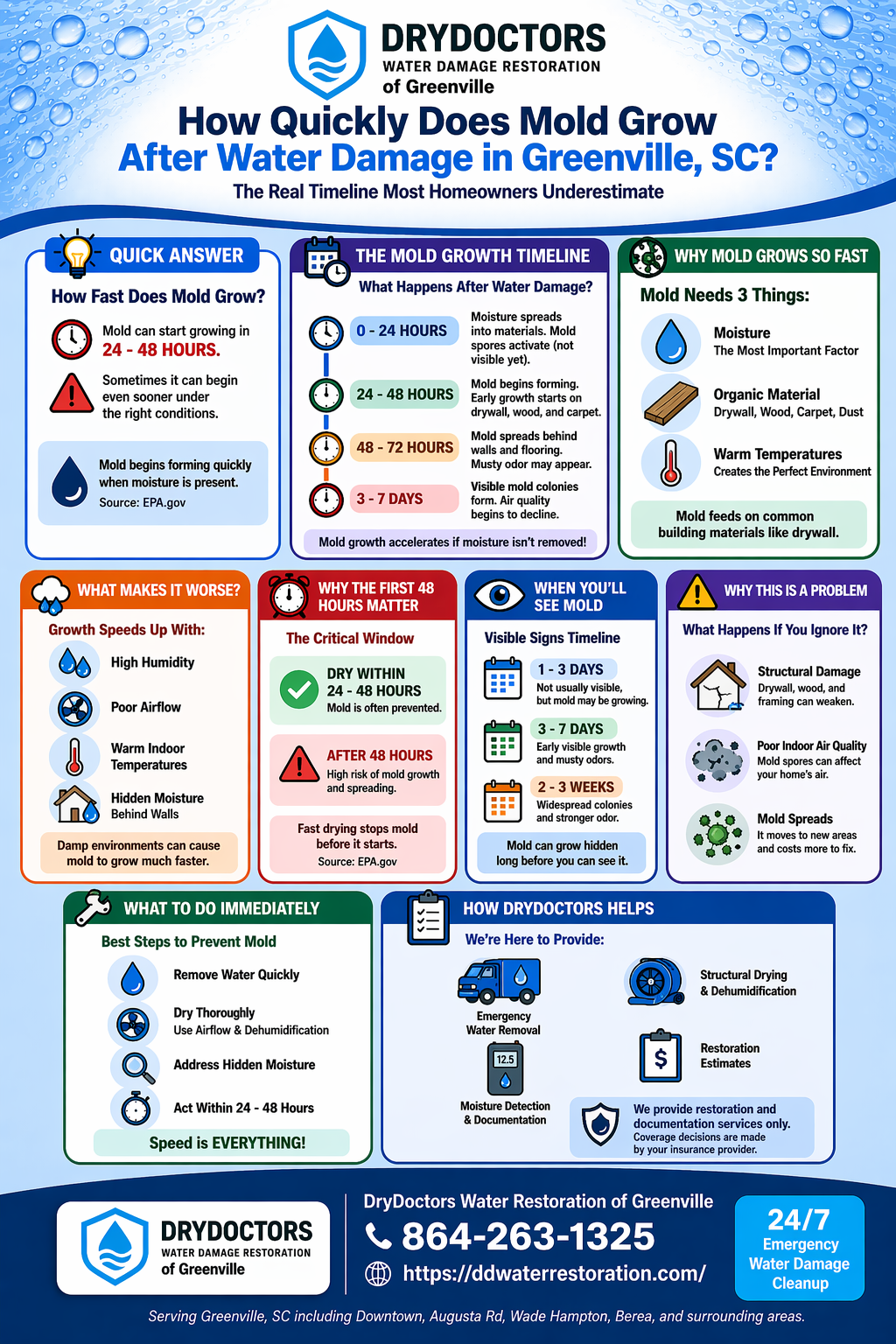
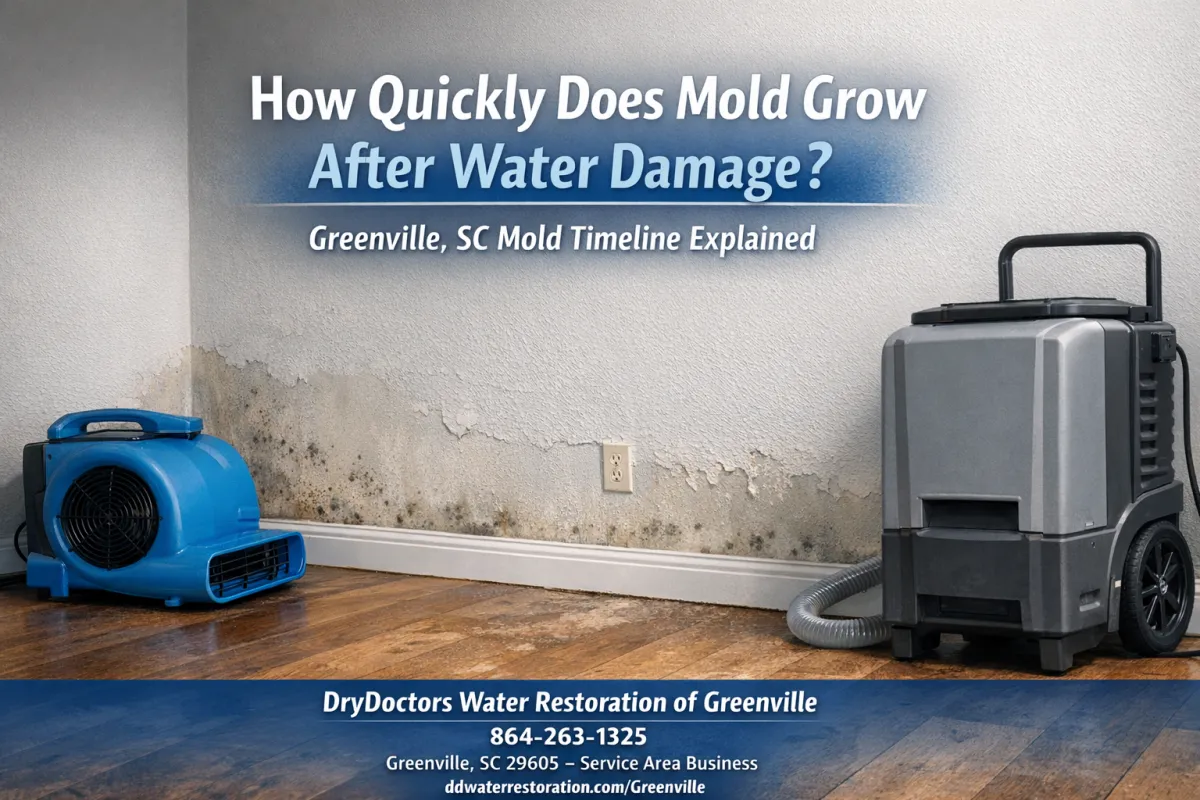
Mold can begin growing within 24 to 48 hours after water damage when moisture remains trapped in materials like drywall, insulation, carpet pad, subfloors, or wood framing. In Greenville, that timeline can become more important because humidity slows drying and hidden moisture often remains active longer than homeowners expect. The real issue is not just the clock. It is whether the structure was dried deeply enough to stop microbial growth before it had the conditions it needed.
The real timeline is about wet materials, not visible water
A lot of people think mold starts once they still see standing water. That is not usually how it works. Mold risk often begins after the visible water is gone but the materials are still wet internally.
That matters because:
drywall can wick moisture upward through capillary action
carpet can feel better while the pad underneath stays wet
insulation can trap moisture inside wall or ceiling cavities
hardwood and subfloors can hold water longer than the surface suggests
The IICRC S500 makes the larger point clearly: “Mitigation following water damage events should begin as soon as safely possible, or microbial contaminants can grow and amplify”.
That is why the answer is not just “mold grows in 24–48 hours.” The better answer is: mold can begin growing that quickly if wet materials are not identified and dried correctly.
Why Greenville homes are especially vulnerable
Greenville homes and buildings often deal with a mix of conditions that increase mold risk after water damage:
elevated ambient humidity
crawl spaces that keep moisture active below the floor system
slab homes where water can spread beneath finished flooring
roof leaks that keep insulation wet above ceilings
older housing stock with layered wall and floor assemblies
When those conditions combine with a plumbing leak, appliance overflow, storm intrusion, or crawl space water event, moisture can stay hidden in the structure long enough for mold to begin developing before there is any dramatic visible sign.
That is one reason the first day matters so much in Greenville and the Upstate. A room may look improved, but the materials behind it may still be wet enough to support growth.
What usually happens in the first 24–48 hours
In the early stage after a water loss, moisture spreads faster than many property owners realize. It moves into porous and semi-porous materials and begins changing the indoor environment.
In a typical Greenville water loss, the first 24–48 hours often involve:
moisture migrating behind baseboards and drywall
insulation staying damp inside wall cavities
water spreading beneath LVP, laminate, hardwood, or carpet
elevated indoor humidity slowing evaporation
hidden wet materials staying undetected because the surface looks better
This is where your updated knowledge base changes the article. The real subject is not “mold” by itself. It is moisture behavior inside building materials.
Mold becomes likely when materials remain wet long enough for spores already present in the environment to start growing. The ANSI/IICRC S520 explains that spores are “generally considered dormant until germination, the start of growth triggered by particular environmental conditions such as temperature and water.”
That means water is not just one factor. It is one of the trigger conditions.
Why hidden moisture changes the outcome
The biggest mistake after water damage is assuming surface dryness means the problem is over.
It does not.
A few common examples:
carpet may feel dry while the pad is still saturated
drywall may look normal while insulation behind it is damp
engineered flooring may trap moisture under the finish layer
cabinet toe-kicks can hide wet subfloor edges
baseboards can cover damp wall-to-floor joints
This is exactly why structural drying and verification matter more than cosmetic cleanup.
The ANSI/IICRC S500 says drying goals should be set in a way that would “return structure, systems, or contents to an acceptable condition; and inhibit microbial growth.”
That line is important because it shifts the focus from “make it look dry” to “dry it enough to reduce mold risk.”
So when does mold become a serious concern?
Mold risk becomes much more serious when one or more of these are true:
water has been present longer than a day
the loss affected drywall, insulation, carpet pad, or wood materials
moisture reached enclosed areas like wall cavities or under flooring
there is a musty odor after the visible cleanup
materials are swelling, staining, softening, or warping
the drying process was started late or not monitored
At that point, the question is no longer only “how fast does mold grow?” It becomes “how much hidden moisture is still in the structure?”
Why drying has to be verified, not assumed
This is the part most blog posts miss.
The IICRC S500 states: “Drying equipment should remain in operation on site until it has been verified and documented that the drying goals have been achieved.”
That is the standard-minded answer to mold prevention after water damage.
Not:
run a few fans
wait until the carpet feels dry
assume the stain is old
stop when the room looks normal
Instead:
inspect for the full extent of moisture migration
extract standing water quickly
create airflow and dehumidification that actually support evaporation
monitor materials until drying goals are achieved
That is how you reduce the chance that a water damage job becomes a mold remediation job.
Bottom line
Mold can begin growing within 24–48 hours after water damage in Greenville, SC when moisture remains trapped in materials. In real buildings, the bigger danger is not just the time window. It is the combination of humidity, hidden moisture, porous materials, and incomplete drying.
If drywall, flooring, insulation, or subfloors stayed wet after a leak, flood, overflow, or storm event, the risk is real even if the room looks better now. The safest assumption is that moisture traveled farther than the visible damage and needs to be checked before mold has more time to establish.
Authoritative references
ANSI/IICRC S500 Standard for Professional Water Damage Restoration – https://iicrc.org/standards/
ANSI/IICRC S520 Standard for Professional Mold Remediation – https://iicrc.org/standards/
Water Damage Restoration: https://ddwaterrestoration.com/water-damage-restoration
Mold Remediation & Prevention: https://ddwaterrestoration.com/mold-remediation-prevention-post-water-damage