How Much Does Basement Water Mitigation Cost? (Greenville, SC)
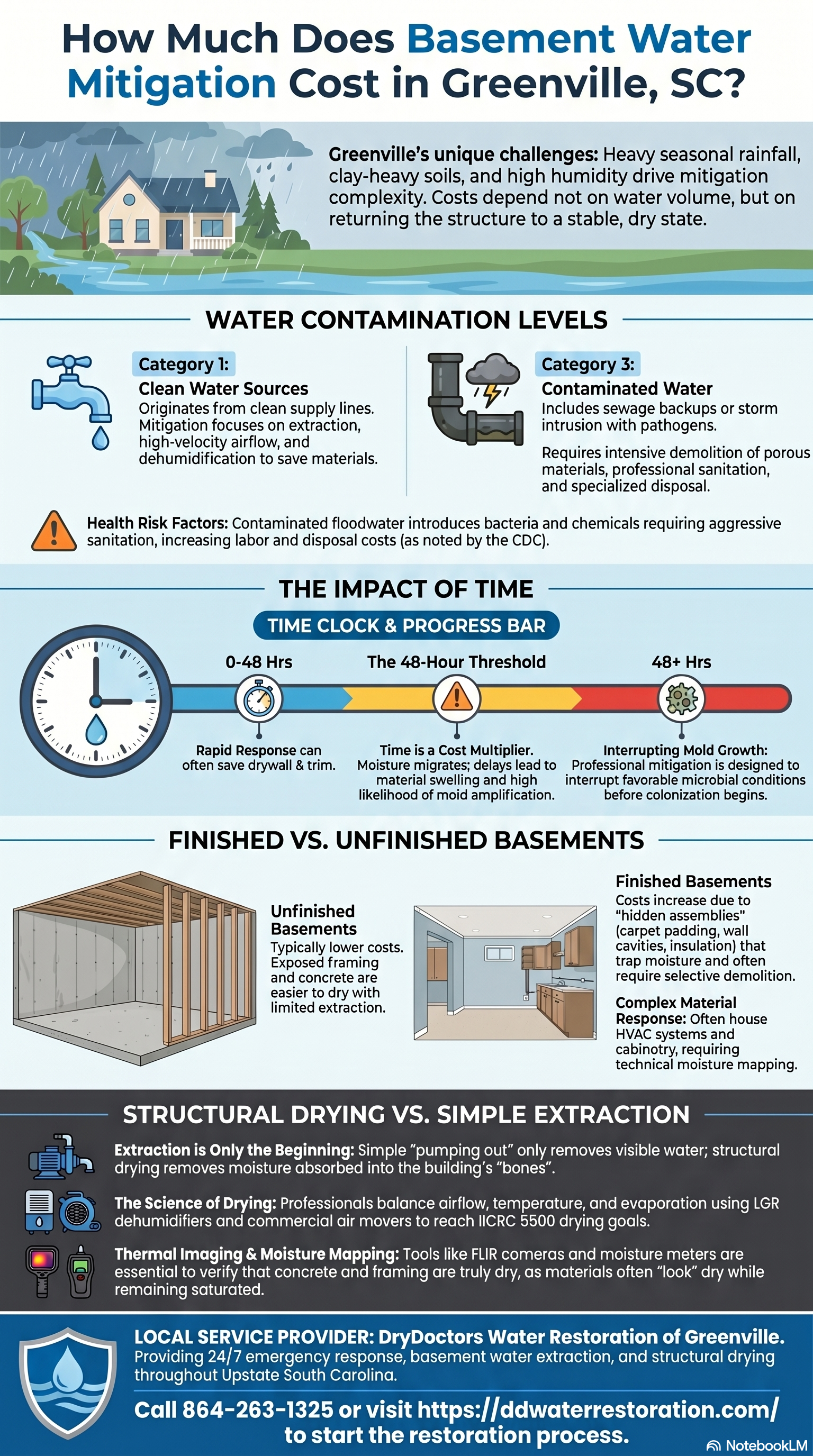
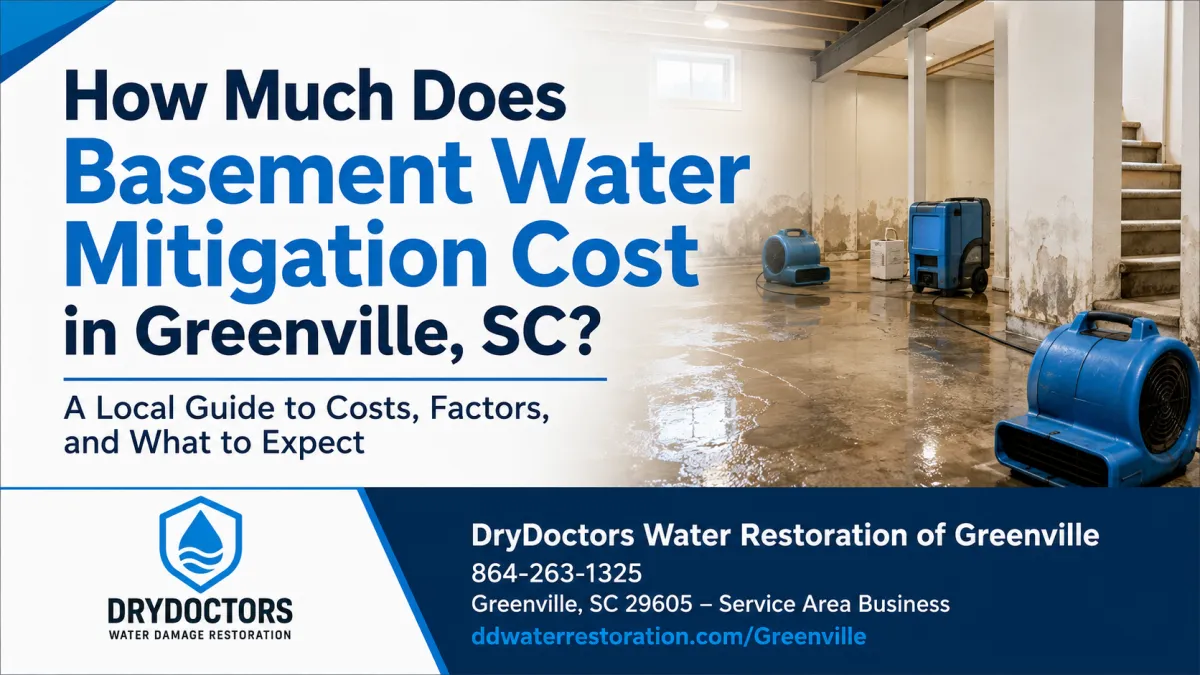
Basement water mitigation costs in Greenville, SC can vary widely because no two basement water losses behave the same way. The cost is not determined solely by how much water is visible on the floor. What truly drives mitigation complexity is how far moisture traveled into the structure, how long the basement remained wet, whether contamination is involved, and how difficult it is to return materials to a dry and stable condition.
A basement with a small clean-water pipe leak may require limited extraction and controlled drying. A basement affected by storm intrusion, groundwater seepage, or sewage contamination may require demolition, sanitation, prolonged dehumidification, and microbial prevention measures. That is why basement mitigation pricing can range from relatively minor emergency drying work to large-scale structural restoration projects.
One of the biggest misconceptions homeowners have is assuming basement water mitigation is simply “pumping out water.” In reality, the visible water is usually only the beginning of the problem.
Why Basements Are More Difficult to Dry Than Other Areas of a Home
Basements behave differently than upper floors because of how moisture interacts with below-grade environments.
In Greenville and Upstate South Carolina, basements are already exposed to elevated humidity levels due to:
heavy seasonal rainfall
clay-heavy soils that retain moisture
hydrostatic pressure against foundation walls
humid crawl space and subgrade conditions
slower natural airflow compared to upper living spaces
Once water enters a basement, materials begin absorbing moisture almost immediately. Concrete, framing, insulation, drywall, and subfloor systems all respond differently depending on saturation levels and exposure duration.
Concrete is particularly deceptive because it may appear dry while continuing to release moisture vapor for days or even weeks after a water event. This is one reason professional mitigation often requires extended dehumidification and moisture monitoring instead of simple surface drying.
The Institute of Inspection Cleaning and Restoration Certification (IICRC) explains in the S500 standard that successful mitigation requires returning materials to an acceptable drying goal rather than relying on visual appearance alone.
The Source of Water Significantly Changes the Scope of Mitigation
Not all basement flooding is treated the same way.
A clean water supply line leak is very different from a sewage backup or groundwater intrusion event.
For example, a basement affected by Category 1 clean water may primarily require:
extraction
airflow
dehumidification
moisture verification
However, once contamination becomes involved, mitigation changes dramatically.
Groundwater intrusion and sewage backups can contain:
bacteria
pathogens
chemicals
organic contaminants
The CDC warns that floodwater exposure can create serious health concerns depending on contamination conditions.
When contaminated water enters a basement, materials like insulation, carpet padding, porous contents, and portions of drywall may no longer be considered salvageable. This increases:
labor requirements
demolition needs
drying time
disposal costs
sanitation procedures
This is one of the primary reasons basement mitigation costs vary so dramatically from one property to another.
Time Is One of the Largest Cost Multipliers
The longer water remains inside the basement, the more expensive mitigation typically becomes.
This happens because moisture does not stay where the water first entered. Water migrates through materials using:
capillary action
absorption
gravity
vapor diffusion
As time passes:
drywall absorbs deeper moisture
wood framing swells
subfloors retain trapped water
insulation loses effectiveness
humidity levels rise throughout the structure
In Greenville’s humid environment, evaporation naturally slows down. This means moisture can remain trapped significantly longer than homeowners realize.
A basement dried quickly after a small water event may avoid demolition entirely. A basement left wet for several days may require removal of:
drywall
flooring
insulation
trim
cabinetry
Once microbial growth conditions begin developing, mitigation may also involve containment and mold remediation procedures.
Structural Drying Is Usually the Most Important Part of Mitigation
Most homeowners focus on extraction because that is the visible portion of the work. In reality, structural drying is often the most time-intensive and technically important phase.
Professional drying involves balancing:
airflow
humidity control
temperature
evaporation rates
This process often includes:
commercial air movers
low-grain refrigerant dehumidifiers
moisture mapping
thermal imaging
daily moisture monitoring
The goal is not simply to “dry the basement.” The goal is to remove moisture from inside the structure itself.
This is especially important in finished basements where moisture becomes trapped behind:
drywall assemblies
flooring systems
insulation
cabinetry
wall cavities
Learn more:
https://ddwaterrestoration.com/structural-drying-dehumidification
Why Finished Basements Usually Cost More to Mitigate
Finished basements are typically more expensive because they contain more absorbent materials and hidden assemblies.
An unfinished basement may primarily involve:
concrete drying
limited extraction
exposed framing
A finished basement may involve:
carpet removal
drywall demolition
insulation replacement
hardwood or laminate flooring removal
cabinet drying
hidden moisture mapping
Finished materials trap moisture more easily and often require selective demolition to expose wet structural components for drying.
In many Greenville homes, finished basements also contain HVAC systems, storage rooms, and entertainment areas, which further increases mitigation complexity.
Mold Prevention Is One of the Main Goals of Mitigation
Basements naturally create favorable conditions for microbial growth because they tend to:
have reduced airflow
maintain higher humidity
retain moisture longer
contain porous building materials
The gypsum industry’s mold prevention guidance explains that prolonged moisture exposure significantly increases the likelihood of mold amplification on gypsum board products.
Mitigation is designed to interrupt these conditions before microbial growth becomes established.
This is why rapid response matters.
A fast mitigation response can often prevent:
structural deterioration
odor development
mold colonization
secondary damage escalation
What Homeowners Often Underestimate About Basement Water Damage
One of the most underestimated aspects of basement flooding is hidden moisture.
Even after visible water is removed:
subfloors may remain wet
framing can retain elevated moisture
wall cavities may trap humidity
vapor can continue migrating through materials
This is why professional moisture measurement matters so much.
A basement that “looks dry” may still contain enough trapped moisture to continue damaging the structure.
The Real Purpose of Water Mitigation
Water mitigation is not simply cleanup.
It is a controlled process designed to:
stabilize the structure
prevent secondary damage
reduce microbial risk
return materials to acceptable moisture levels
minimize permanent damage
The final cost depends on how difficult it is to accomplish those goals based on the conditions present in the basement.
Bottom Line
Basement water mitigation costs in Greenville, SC depend on far more than the amount of standing water visible after a flood or leak.
The true cost is determined by:
contamination conditions
material saturation
drying complexity
hidden moisture migration
demolition requirements
structural drying duration
The faster mitigation begins, the better the chances of reducing long-term structural damage and keeping restoration costs under control.
Need basement water mitigation in Greenville, SC?
DryDoctors Water Restoration of Greenville provides 24/7 emergency response, basement water extraction, structural drying, moisture inspection, and restoration services throughout Upstate South Carolina.
📞 864-263-1325
📍 https://maps.app.goo.gl/ZTPxnC2QwHb24t6K6
🌐 https://ddwaterrestoration.com/