How Do You Dry Out a House After Water Damage in Greenville, SC?
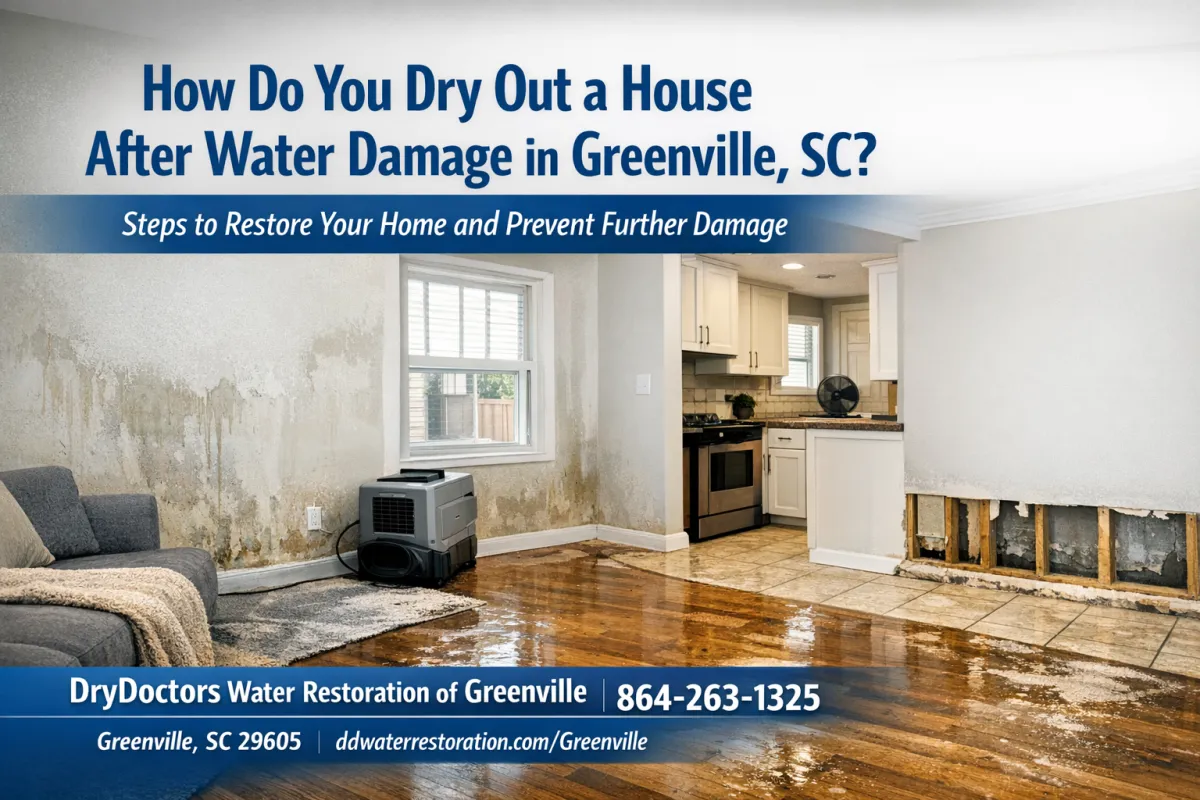
How Do You Dry Out a House After Water Damage in Greenville, SC?
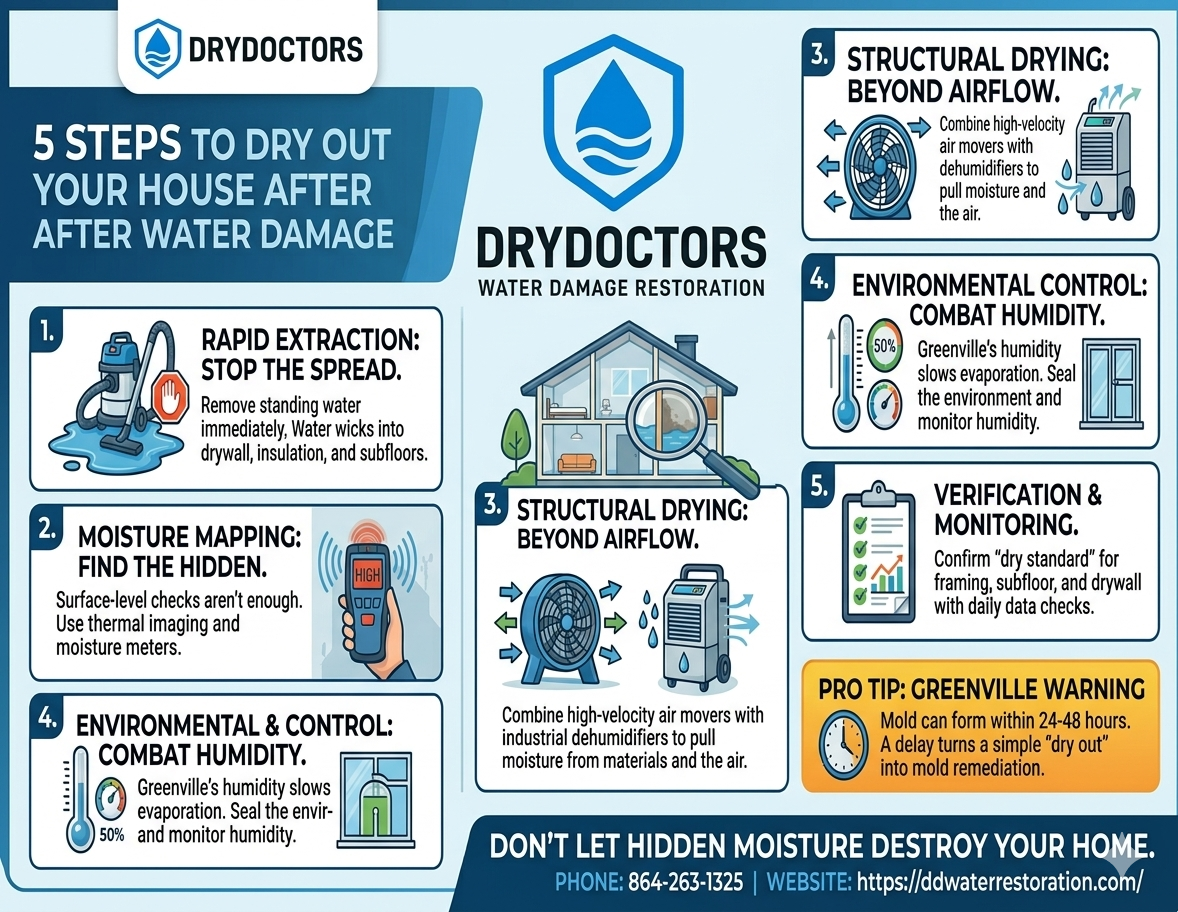
To properly dry out a house after water damage, you must remove standing water, eliminate moisture from materials, control humidity, and verify drying using measurements—not just visual inspection. In Greenville, SC, this process is especially important because humidity slows evaporation and allows moisture to remain trapped inside structures.
Drying a house is not just about removing water—it is about removing moisture from inside materials like drywall, flooring, subfloors, and framing.
Step 1: Stop the Water Source and Assess the Damage
Before drying begins, the source of water must be stopped.
This may include:
shutting off plumbing lines
repairing roof leaks
addressing appliance failures
stopping groundwater intrusion
Once controlled, the affected areas must be evaluated to determine:
how far water has spread
which materials are saturated
whether contamination is present
The Institute of Inspection Cleaning and Restoration Certification S500 Standard emphasizes inspection and evaluation as the first step in developing a drying plan.
Step 2: Remove Standing Water (Extraction Phase)
The next step is removing visible water.
This includes:
pumping out standing water
extracting water from carpets and padding
removing pooled water from hard surfaces
This step reduces immediate damage, but it does NOT complete the drying process.
Start here:
Emergency Water Removal & Cleanup
Step 3: Understand That Moisture Has Already Spread
Even after extraction, moisture remains inside materials.
Water moves through structures by:
absorption into porous materials
capillary action through building components
gravity pulling water into lower levels
This means:
drywall absorbs water internally
subfloors hold moisture beneath flooring
insulation traps water behind walls
This is why drying must go beyond surface-level cleanup.
Step 4: Create Airflow to Drive Evaporation
Drying requires controlled airflow.
This is done using:
air movers (high-velocity fans)
strategic placement to move air across wet surfaces
Airflow increases evaporation by:
pushing moisture out of materials
accelerating surface drying
preventing stagnant conditions
However, airflow alone is not enough.
Step 5: Remove Moisture From the Air (Dehumidification)
As moisture evaporates, it enters the air.
If that moisture is not removed:
humidity increases
drying slows or stops
materials reabsorb moisture
This is where dehumidifiers are critical.
They:
pull moisture from the air
maintain optimal drying conditions
prevent secondary damage
Learn more:
Professional Structural Drying & Dehumidification
Step 6: Control Temperature and Humidity
Drying is a controlled process—not random.
Key factors include:
temperature (affects evaporation rate)
humidity (affects moisture removal)
airflow (affects surface drying)
In Greenville:
high humidity slows evaporation
crawl spaces add ambient moisture
seasonal conditions affect drying time
Proper drying balances all three variables.
Step 7: Monitor and Measure Moisture Levels
Drying is not complete when materials “feel dry.”
The IICRC explains that drying must be verified and documented.
This includes:
moisture meters
humidity readings
daily monitoring
“Drying equipment should remain in operation until drying goals have been achieved.”
Without measurement, hidden moisture can remain.
Step 8: Remove Materials That Cannot Be Dried
Some materials cannot be restored.
This includes:
saturated drywall
contaminated materials
insulation
severely damaged flooring
The IICRC states that materials must be removed when they cannot return to pre-loss condition.
Step 9: Address Hidden Moisture Areas
The biggest risk is moisture you cannot see.
Common hidden areas include:
wall cavities
subfloors
crawl spaces
behind cabinets
The Centers for Disease Control and Prevention emphasizes moisture control as critical to preventing mold growth.
Step 10: Prevent Mold and Secondary Damage
If moisture is not removed:
mold can develop
materials can degrade
air quality can be affected
Drying is not just about water removal—it is about stopping long-term damage.
Greenville-Specific Drying Challenges
Drying a house in Greenville is more difficult due to:
high humidity slowing evaporation
crawl spaces holding moisture under homes
mixed flooring systems trapping water
seasonal storms causing repeated exposure
These conditions make professional drying methods more important.
https://www.podbean.com/eas/pb-tdq8q-1a98ef5
Bottom Line
Drying out a house after water damage requires more than removing visible water. It involves controlled evaporation, dehumidification, and verification of moisture removal inside materials.
The goal is not just to make the house look dry—it is to ensure it is structurally dry and stable.
CTA
Need help drying out your home after water damage in Greenville, SC?
DryDoctors Water Restoration of Greenville provides 24/7 emergency response, moisture detection, structural drying, and full restoration services.
📞 864-263-1325
📍 https://maps.app.goo.gl/ZTPxnC2QwHb24t6K6
🌐 https://ddwaterrestoration.com/